
Guido of Burgundy. The promoter of the Codex Calixtinus.
Very few people know who Guido was, his name before his election to the papacy. He was the son of Count William of Burgundy. Both branches of his family, paternal and maternal, were closely connected to almost all the royal houses of Europe. His brother, Hugh, had been Archbishop of Besançon, and Guido himself had been Archbishop of Vienne (1088), and later, papal legate to France for Paschal II.
On February 1, four days after the death of Gelasius and thanks to the efforts of Cardinal Cuno, Guido was elected Pope, taking the name Callixtus II. His coronation was in Vienne on February 9, 1119.
His election was met with great enthusiasm throughout the world. Because of his close ties to noble families in France, Germany, England, and Denmark, it was hoped that he would lay the groundwork for a policy of understanding regarding this controversy that had so long divided the Church.
Callixtus II convened the First Lateran Council on March 18, 1123. This Council was very representative: nearly three hundred bishops and six hundred abbots from all parts of Catholic Europe were present.
Decrees were also passed against violators of the Peace of God, church robbers, and forgers of ecclesiastical documents. Indulgences already granted to the Crusaders were renewed, and the jurisdiction of bishops over the clergy, both secular and regular, was more clearly defined.
Pope Callixtus II died in 1124, and after some dispute, Honorius II was elected his successor. The great influence of Callixtus II's reign on Church politics is undeniable. He was responsible for revising the weak concessions made by Paschal II, and after his accession to the papal throne, his firmness and strength of character established an initial phase in Church-State relations which, while not entirely satisfactory, at least ensured the peace that was so necessary at the time.
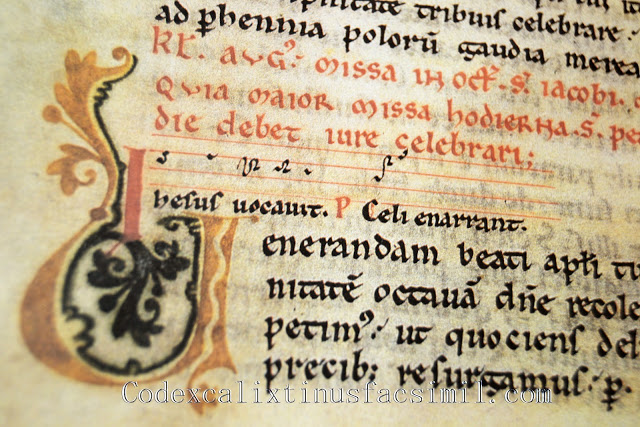
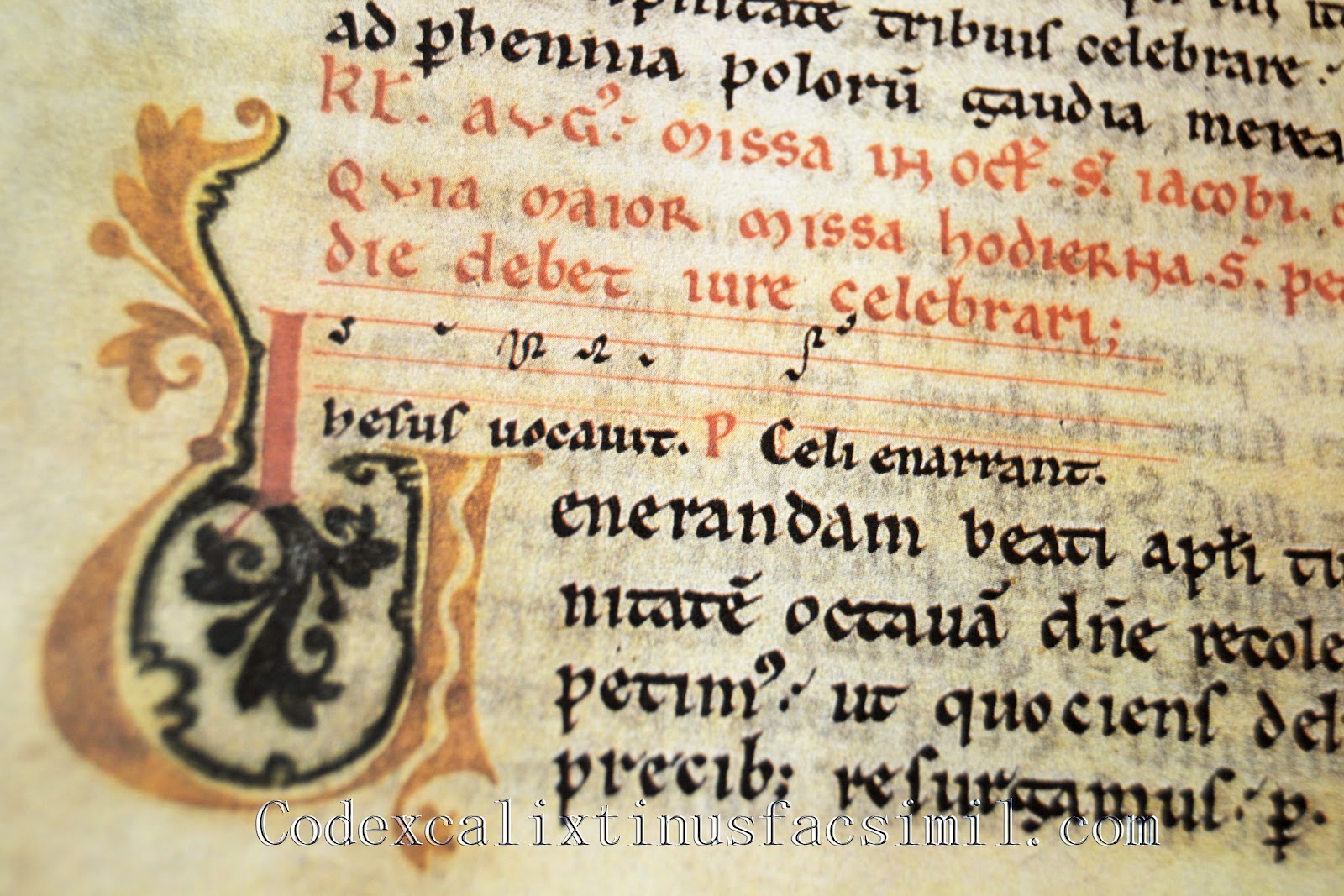
He was responsible for the personal commission of the Codex Calixtinus or Codex Calixtinus And for this reason, and to further enhance its renown, his surname was used. This Pope, a great lover of the Camino de Santiago and a fervent follower of the Apostle, transformed the Way of St. James into the third most important pilgrimage route in Christendom. In turn, by sponsoring this valuable manuscript, he helped to leave a historical, social, cultural, and religious legacy of incalculable value to future generations, enabling them to understand the past and evolution of the Way of St. James.
Are you interested in the Codex Calixtinus? See the facsimile edition of the Iacobus Codex Calixtinus and the Spanish translation of Book V in the Club store.


About author

Related posts
POLYPHONY IN THE CALIXTINO CODEX EVA ESTEVE ROLDÁN Higher Conservatory of Music of Zaragoza INTRODUCTION We will try to delve into the Middle Ages and during a... Continue reading
The Codex Calixtinus is a wonderful testimony to the political, social, cultural, religious, musical and intellectual structure of the medieval world. "The Medieval Pilgrim's Guide", which... Continue reading
Add comment
You must be logged in to post a comment.