
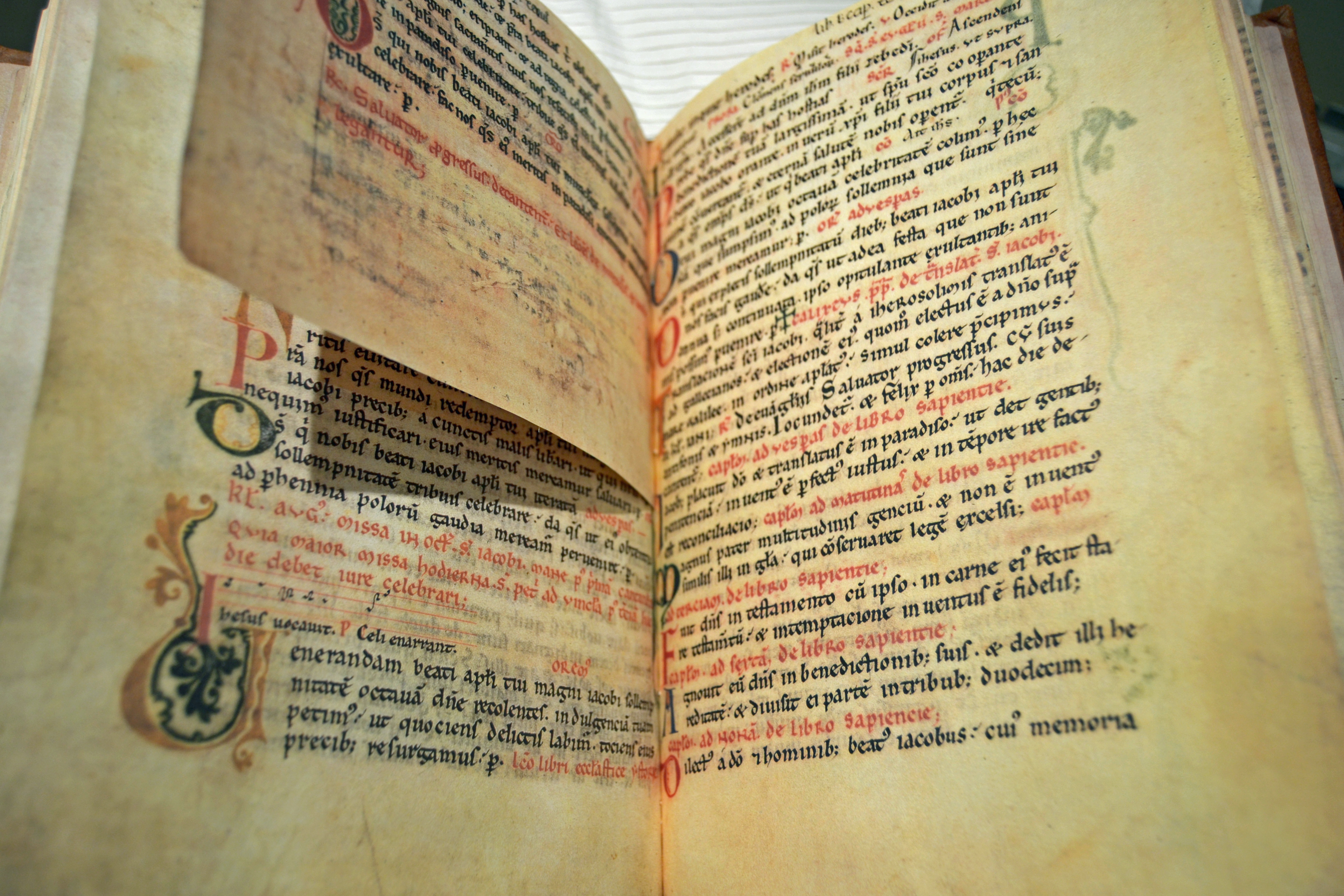
The secrets of the Codex Calixtinus
The Codex Calixtinus is a wonderful testament to the political, social, cultural, religious, musical, and intellectual structure of the medieval world. "The Medieval Pilgrim's Guide," which offers vivid descriptions of different towns and peoples, their customs, habitats, social organization, linguistic practices, and the unique fusion of Franco-Hispanic elements, is a beautiful lesson in ethnography.
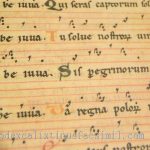
The music in the codex is a subject in itself and offers a wonderful insight into the state of musical composition in the twelfth century: the texts of James, along with their accompanying tropes and monophonic sequences, are a clear example of how the liturgy was expanded and embellished for a new, great feast day. The highlight is the polyphonic musical repertoire, which includes the earliest known composition for three voices and serves as an important bridge to the Notre Dame School. Without this repertoire, our understanding of the birth and evolution of polyphony in the Western world would be completely distorted.
It is due to its incalculable value in so many and varied disciplines that the Codex Calixtinus is considered one of the most monumental works of medieval study, being a basic and indispensable tool in your library.
Are you interested in the Codex Calixtinus? See the facsimile edition of the Iacobus Codex Calixtinus and the Spanish translation of Book V in the Club store.
About author

Add comment
You must be logged in to post a comment.