
The Turpini History, a chronicle of war in the 12th century (Codex Calixtinus)
 |
|
|
The story of Karoli Magni et Rotholandi is part of the Codex Calixtinus, specifically Book IV, commonly known as the Historia Turpini or Pseudo-Turpin. The story of this book is unusual, as it takes its name from Turpin (748-794), a monk and treasurer of Saint-Denis who later became Archbishop of Reims. He is an important figure who even appears in the Song of Roland. However, what most people don't know is that the true author is an anonymous cleric of French origin. In those times, to lend importance to writings and ensure they were accepted into monasteries for copying, it was common practice to attribute them to prominent figures, thus making these types of manuscripts more visible.
This magnificent copy was separated from the original in 1609 to form an independent volume, of which more than fifty copies were made and distributed among the most important libraries in the world. In 1966, the book was reintroduced during the restoration carried out by the National Library of Spain, where several repairs were made to damaged pages, and larger pages that protruded from the new binding were trimmed.
The Historia Turpini consists of 26 chapters occupying 28 folios (163-191), thus being one of the longest in the Codex Calixtinus.
In its various chapters, this book recounts the siege of Pamplona and its conquest thanks to the aid of Saint James, as well as the conquest of the various Saracen lands, culminating in the town of Padrón, where Charlemagne himself thrust a lance into the ground to give thanks to God and his apostle Saint James. It also tells how the African king Aigoland reconquered the territories he had liberated, and how Charlemagne was forced to return to Spain to liberate them once more. Another chapter describes how he faced a descendant of Goliath named Ferraguth, who came from Syria and confronted Roland, sent by the king himself to fight him. Interestingly, in this passage, the two engage in a discussion about their respective faiths.
Each and every battle is detailed, as well as the most important events, recounting the death of Archbishop Turpin or that of Charlemagne himself.
A priceless legacy that has allowed the study of different areas of knowledge and that is part of the most ancient of our histories.
Sources: Translation of the Codex Calixtinus.
Various studies of the Codex.
Are you interested in the Codex Calixtinus? See the facsimile edition of the Iacobus Codex Calixtinus and the Spanish translation of Book V in the Club store.

About author

Related posts
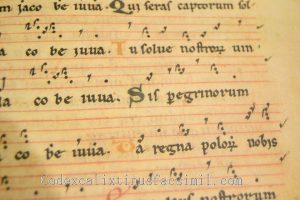
POLYPHONY IN THE CALIXTINO CODEX EVA ESTEVE ROLDÁN Higher Conservatory of Music of Zaragoza INTRODUCTION We will try to delve into the Middle Ages and during a... Continue reading
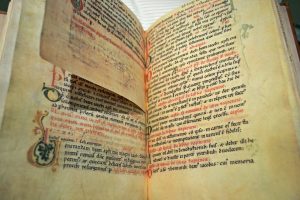
The Codex Calixtinus is a wonderful testimony to the political, social, cultural, religious, musical and intellectual structure of the medieval world. "The Medieval Pilgrim's Guide", which... Continue reading
2 comments
GMP
Very interesting, friends. Greetings. Guadalupe.
Codex Calixtinus
Thank you so much, we love that you participate in the blog and that you like it.