
The Pilgrim's Guide, The Lonely Planet of the Camino. Book V of the Codex Calixtinus

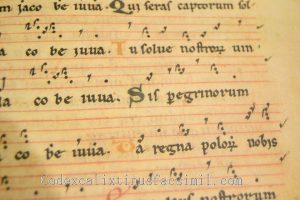
If we currently enjoy the Camino de Santiago as we know it today, it is undoubtedly thanks to the Codex Calixtinus. This manuscript was the one that, in a way, legitimized this ancient path for centuries to come.

Everyone should receive with charity and respect the pilgrims, rich or poor, who are returning to or traveling to the land of Santiago, for whoever receives and hosts them with care will have as their guest not only Saint James, but also the Lord Himself, according to His words in the Gospel: «Whoever receives you receives me.» There were many in the past who incurred God's wrath for refusing to welcome the poor and the pilgrims to Santiago. In Nantua, a town between Geneva and Lyon, a weaver's cloth suddenly fell to the ground, torn in two, for having refused to give bread to a pilgrim to Santiago who asked for it. In Vilanova, a needy pilgrim to Santiago begged alms for the love of God and Saint James from a woman who, having bread still among the hot embers, told him she had no bread. The pilgrim said to her, "May the bread you have turn to stones!" The pilgrim left her house, and he was already far away when the woman approached the embers intending to take the bread, but instead found a round stone. Repentant, she went after the pilgrim, but she could not find him. Returning penniless from Santiago on one occasion, two noble Gauls, for the love of God and Saint James, sought lodging in the city of Poitiers, from the house of Jean de Gautier to Saint Porcarius, without finding any. Finally, they stayed in the last house on that street, next to the church of Saint Porcarius, in the house of a poor man; and behold, as divine vengeance, a raging fire consumed the entire street from the house where they had first sought lodging to the one where they stayed. And there were about a thousand houses. But the house where the servants of God stayed, by divine grace, remained untouched. Therefore, it should be known that pilgrims to Santiago, whether poor or rich, have the right to hospitality and a respectful welcome.«
Are you interested in the Codex Calixtinus? See the facsimile edition of the Iacobus Codex Calixtinus and the Spanish translation of Book V in the Club store.

About author

Add comment
You must be logged in to post a comment.