
Carolingian script in the Codex Calixtinus
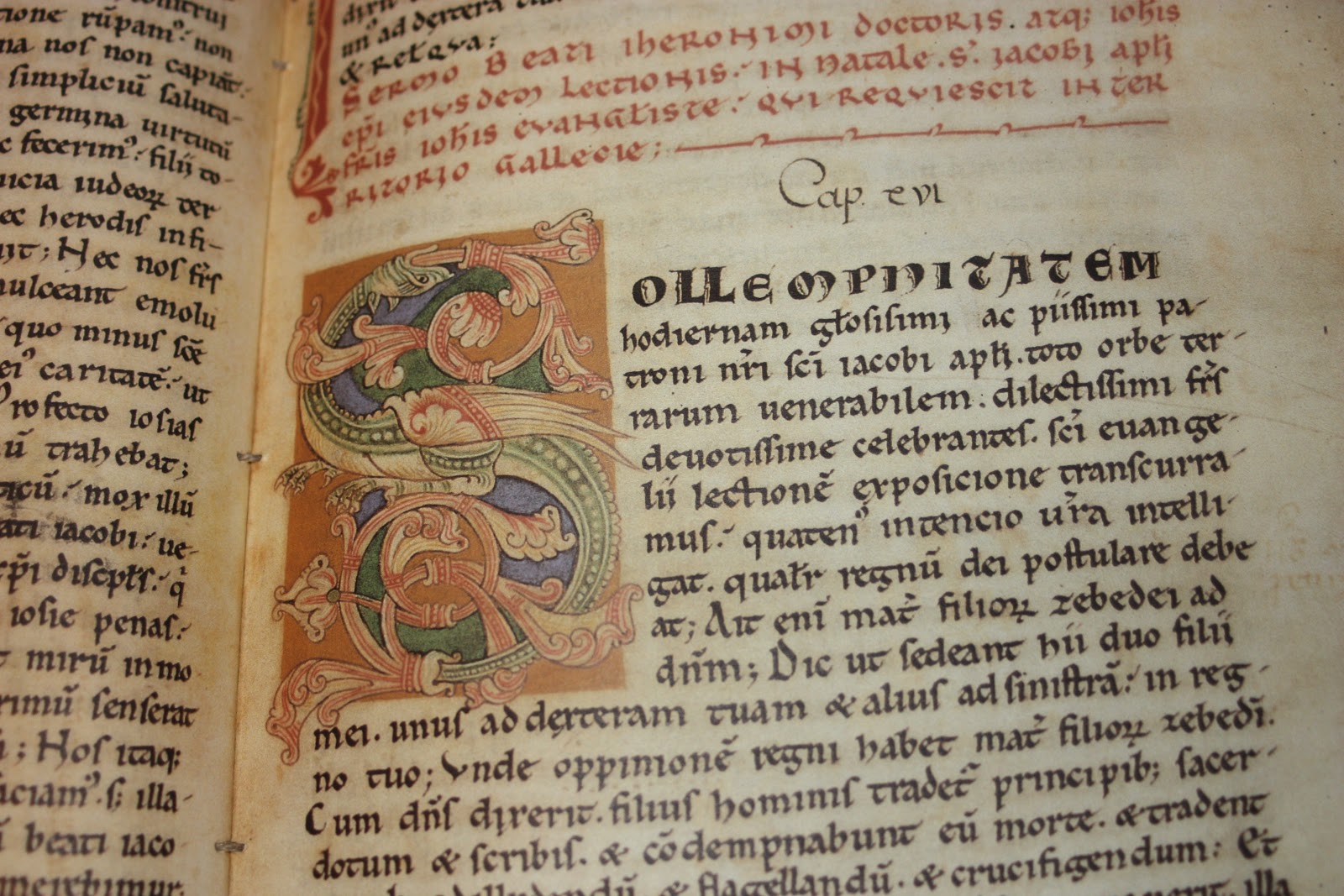 |
| © Photograph of the facsimile of the Codex Calixtinus |
This type of calligraphy is not determined by a specific geographical area, but rather by the broad cultural movement and interest in studies in general that arose during Charlemagne's time. The name might suggest that the emperor himself was the original inventor of this type of writing, but nothing could be further from the truth, as he was illiterate and only learned to write in the final stages of his life.
As we know, the Codex Calixtinus is written in Carolingian script, and according to researchers at the Complutense University of Madrid, such as Elisa Ruiz, the manuscript was written between 1160 and 1180. Its age has been determined through the study of the calligraphy, since scientific methods like Carbon-14 dating are ineffective on inorganic materials. This same expert indicates that it was written in the second half of the 12th century using Carolingian minuscule with French-origin capital letters. She also notes the use of abbreviations more characteristic of the later phase of this type of script. It was probably written by French scribes, given the precision and technique required by this script, as she stated in a seminar held in León in 2010.
Are you interested in the Codex Calixtinus? See the facsimile edition of the Iacobus Codex Calixtinus and the Spanish translation of Book V in the Club store.

About author

One comment
Anonymous
Very interesting. Great blog, full of information. Thank you for your work.