
Codex Calixtinus Book I (Translation) part I
Prólogo
 Justamen te signado, Santiago este libro es llamado. Sea para el escritor la gloria y para el lectorCalixto Obispo, siervo de los siervos de Dios, a la muy venerable comunidad de la basílica cluniacense, sede de su elección apostólica, y a los ilustrísimos señores Guillermo, Patriarca de Jerusalén, y Diego, Arzobispo de Compostela, ya todos los fieles salud y bendición apostólica en Cristo. Como en ninguna parte del mundo pueden hallarse varones más excelentes que vosotros en dignidad y honor, a vuestra paternidad envío este códice de Santiago para que si pudiéseis hallar en él algo que deba corregir-se lo emmiende vuestra autoridad con diligencia por amor del Apóstol.Pues en verdad he pasado innumerables angustias por este códice. Mientras era escolar, amando al Apóstol desde la niñez, al recorrer por espacio de catorce años tierra y regiones extranjeras todo lo que acerca de él hallaba escrito lo copiaba con diligencia en unas pocas hojas ásperas y ruines, a fin de exponerlo en un volumen para que los amantes de Santiago hallasen más a mano y reunido lo que debe leerse en los días festivos. ¡Oh admirable fortuna! Caí en poder de ladrones y despojado de todo sólo me quedó el manuscrito. Fuí encerrado en prisiones y perdida toda mi hacienda, sólo me quedó el manuscrito. En mares de profundas aguas naufragué muchas veces y estuve a punto de morir, y al salir yo salió el manuscrito sin estropearse. Se quema una casa en la cual yo estaba y consumido mi ajuar escapó conmigo sin quemarse el manuscrito. Por eso di en pensar si ya este códice que deseaba llevar a cabo con mis manos sería grato a Dios. Y pensando así con gran afán, arrebatado en éxtasis, una noche vi en un regio y brillante salón a un joven dotado de inefable belleza, rodeado de luz esplendorosa, maravillosamente vestido con regia vestidura, coronado con láurea real, que entraba por la puerta oriental de dicho salón con algunos acompañantes, uno de los cuales dijo así: -He aquí el Hijo del Rey. Y sentándose El en sguida en el mejor asiento, me dijo a mi que lo estaba a sus pies: -Enseñame los guantes que tienes en las manos. Yo se los presenté de buena gana y habiéndolos tomado en las suyas y entrado en su cámara, uno de sus acompanyantes que era como su mayordomo me dijo de El: -Es el Hijo del más alto Rey. Y agregó: -Así como ha recibido de tus manos los guantes, recibirá de buena gana y complacido el códice del Apóstol cuando lo tengas acabado. Otra vez, mientras meditaba el sermón de la traslación del Apóstol El día venerado y tenía entre las manos el cuaderno de tal escrito, se me apareció El mismoSantiago en un éxtasis y me dijo: -No difieras el escribir esos preceptos que nos son gratos y que han de observar todos. Escribe lo que has comenzado, censurando los delitos de los malos hospederos que moran en el camino de mi Apóstol. Y nadie piense, pues, que yo he escrito algo de mi propia invención, sino que de libros auténticos, a saber, de uno y otro Testamento y de los santos doctores Jerónimo, Ambrosio, Agustín, Gregorio, Beda, Máximo, León y otros católicos, entienda que he extractado el contenido del primer libro como en él está patente. A su vez las demás cosas que en los libros siguientes están escritas como historia o las vi yo con mis propios ojos, o las hallé escritas, o me enteré de ellas por relato veracísimo y las escribí como mías. Nadie menosprecie tampoco este libro cuando encuentre en él estilo llano. Porque hemos escrito en estilo llano nuestros sermones para que estuviesen abiertos tanto a los no entendidos; como a los entendidos. Muchos desprecian lo que no entienden; los francese desprecian a los alemanes y los romanos a los griegos, porque no entienden sus lenguas. Si oigo a diario predicar en griego o en alemán y no entiendo, ¿¿que provecho saco? Por eso hicieron exposiciones hace tiempo los santos acerca de los cuatro evangelios y sobre los profetas, porque no se entendían. Si me pones a la mesa pan sin partir lo acepto contento. Si partido, más contento lo recibo. Poco aprovecha la corteza hasta que aparece la miga. La bebida pura mustra más claramente lo que en sí oculta. El ojo limpio y abierto ve más claro que el turbio y cerrado. La vela clara que da luz a todos los circunstantes vale más que la que a unos la da y a otros la niega. Así, pues, está obrita está abierta a todos para que aproveche tanto a los entendidos en letra como a los que no enteinden mucho.Pero debemos indicar lo que debe leerse de él en la iglesia. Todo lo que está escrito en los dos primeros libros, hasta el signo igual a ése
 que significa Jesucristo, cántese y léase en las iglesias en los maitines y misas, conforme está ordenado. Porque es auténtico y está expuesto con gran autoridad. Y todfo lo que va escrito en los siguientes después de dicho signo léase en los refectorios durante las comidas. Es también de mucha autoridad, pero lo contenido en los dos primeros libros es suficiente para leer en los maitines. Y si todos los sermones y milagros de Santiago que contiene este códice no pueden leerse en la iglesia en los días de las fiestas de aquél por su gran extensión, léanse después al menos en el refectorio cada semana el día en que cayó su festividad.Los responsorios y cánticos de misas que de los evangelios hemos sacado y escrito en este libro, nadie dude de cantarlos. Hay quienes dicen que son apócrifos los responsorios de la pasión de Santiago, El apóstol de Cristo Santiago entrando en las sinagogas, porque no todo lo que está escrito en las pasiones de los apóstoles lo tienen todos muy autorizado. Unos lo cantan y otros no. Sin embargo, en la ciudad en que fueron compuestos no se cantan por entero.Unos cantan sin orden responsorios compuestos hace tiempo por un obispo leonés. Otros cantan para Santiago el R) de un mártir o confesor, Santiago, apostol de Cristo, oye los siervos que ruegan; otros cantan igualmente el R) de San Juan Bautista, Oh especial honor, otros el R) de San Nicolás: como si no tuviera responsorios propios, los cantan abusivamente.Cierto canónigo de Santiago, chantre de la basílica, llamado Juan Rodriz, mientras estaba una vez de semana y llenaba su bolsa de las ofrendas del altar, se acordó de que en un responsorio de San Nicolás se canta Supo ofrecer estos bienes a su siervos. Por lo cual solía cantar en el coro en día de fiesta de Santiago este mismo R), quitando el nombre del confesor y diciendo en cambio: Santiago ya triunfante supo ofrecer esto bienes a sus siervos. Mas como la costumbre eclesiástica prohibe cantar un R) de los apóstoles para cualquier confesor, así también prohibe cantar el R) de un confesor o de un máritr, o de San Juan BAutista, o de cualquier santo para cualquier apóstol.En la misa de Santiago cantan unos el introito Alegrémonos todos en el Señor, que la Iglesia suele cantar propiamente sólo para las santas vírgenes, a saber, Agueda, la virgen María y María Magdalena; otros, el introito Regocijémonos todos en el Señor; otros, Demasiado para mí; otros cantan sus estrofas a su gusto, por decirlo así. Por lo cual ordenamos que nadie más se atreva a cantarle un R) a su capricho, sino los auténticos R) de los evangelios, que coniene este libro, Habiendo andado el Salvador un poco, o el R) He aquí que os envío. Igualmente en su misa nadie cante más otro introito que Jesús llamó a Santiago, hijo de Zebedeo con los cánticos que le siguen, o Demasiado para mí. Porque todo cuanto se cante de Santiago debe ser de gran autoridad. Tambien debe tenerse muy en cuenta por los fámulos que la devoción del clero celebre los maitines de Santiago. Y sea triple la lección con sus responsorios. Y no falten las horas. Y que oigan esto los peregrinos.Ordenamos hacer esto al clero de Santiago en su basílica todos los días, exceptuando el de la Natividad del Señor, los de la Cena, la Parasceve y el sábado siguiente, y de Pascua y Pentecostés. Asimismo cántese la primera misa propia de Santiago todos los días a los peregrinos, fuera de los antedichos. Y después de las primeras preces de la misa, cuídese de que siga esta oración por los peregrinos: Te rogamos, Señor, que se abran los oídos de tu misericordia a las oraciones de los peregrinos suplicantes de Santiago, y que a los que piden… (busca en el libro I). Así, pues, todo el que con vanos argumentos o vacuas disputas quite valor a lo que este libro contiene, o lo desprecie, o se atreva a hablar contra él, sea anatema con Arrio y Sabelio. Salud a todos en el Señor.
Libro I Capítulo I
VEINTICUATRO DE JULIO. VIGILIA DE SANTIAGO
Lección de laEpístola de Santiago Apóstol. Santiago siervo de Dios y de nuestro Señor JEsucristo, a las doce tribus de la dispersión, salud, etc.
Sermón de San Beda, el venerable presbítero.
Puesto que la vigilia de Santiago, amadísimos hermanos, estamos ya celebrando con los deseados cultos y convenientes ayunos, cosa digna es que en su honor no dejen nuestras lenguas de pregonar las alabanzas de Cristo. Se declara Santiago siervo de Dios y de nuestro Señor Jesucristo en el comienzo de su epístola y promete la salvación a los fieles, para demostrar que todo el que perseverare hasta el fin en servir a Dios se salvará sin duda para siempre. Dijo acerca de este Santiago el apóstol Pablo: «Santiago, Cefas y Juan, que parecían ser las columnas, nos dieron la mano a mí y a Bernabé en señal de comunión, para que nosotros entre los gentiles y ellos entre los circuncisos, solamente de los pobres nos acordásemos». Pues como había sido ordenado apóstol entre los circuncisos, se preocupó por los que circuncisos estaban, y así como por hablarles presentes, también por consolarlos, instruirlos, reprenderlos y corregirlos ausentes con su carta. «A las doce tribus de la dispersión», dice. Leemos que muerto por los judíos San Esteban, «aquel día comenzó una gran persecución contra la iglesia de Jerualén y todos se dispersaron por las regiones de Judea y Samaria, fuera de los apóstoles». Pues a estos dispersos que padecieron persecución por causa de la justícia, envía su carta Santiago. Y no sólo a ellos, mas también a los que habiendo recibido la fe de Cristo no procuraban aún ser perfectos en sus obras. Así lo atestigua lo que sigue de la epístola. Y también a los que permanecían todavía fuera de la fe y que hasta procuraban perseguirla y perturbarla cuanto podían en los creyentes. Pues todos ellos estaban en la diáspora, desterrados de la patria por diversos azares, y dondequiera eran oprimidos por sus enemigos con innumerables violencias, muertes y trabajos, como lo expone cabalmente la Historia Eclesiástica. Pero también leemos en los Hechos de los Apóstoles que ya en el tiempo de la Pasión del Señor andaban dispersos por todas partes, pues dice San Lucas: «residían en Jerusalén judíos, varones piadosos, de cuantas naciones hay bajo el cielo», de las que hasta se indican muchas por sus nombres cuando se añade más abajo: «partos, medos alamitas y los que habitan la Mesopotamia», etcétera. Así, pues, Santiago anima a los buenos para que no les faltase la fe en las tentaciones; reprende y amonesta a los pecadores para que se abstuvieran de pecar y progresaran en las virtudes, a fin de no hacerse estériles para sí mismos e incluso condenables por haber recibido los sacramentos de la fe; aconseja a los incrédulos para que hicieran penitencia de la muerte del Salvador y de todos los crímenes en que estaban enredados, antes que la venganza divina, cayendo visible o invisiblemente, los abatiese.«Tened por la mayor alegría – dice – , hermanos míos, veros rodeados de diversas tentaciones». Comienza por los más perfectos para llegar por orden a los que veía imperfectos y dignos de corregir y de elevar a la cumbre de la perfección. Y es de observar que no dice simplemente alegráos o tened por una alegría, sino «tened por la mayor alegría veros rodeados de diversas tentaciones». Como si dijese: Tened por cosa digna de toda alegría que por la fe de Cristo os toque resisitir las tentaciones. Esta es la gracia, que por el conocimiento de Dios sufra uno lo que padezca injustamente, pues dice el Apóstol: «No tienen punto de comparación los sufrimientos del tiempo presente con la gloria venidera que ha de manifestarse en nosotros». Y todos los apóstoles «se fueron contentos de la presencia del Consejo, porque habían sido dignos de padecer ultrajes por el nombre de Jesús». No debemos, pues, contristarnos si somos tentados, mas solo si fuéramos vencidos por las tentaciones, 2sabiendo que la prueba de vuestra fe engendra la paciencia». Por eso quiere que seáis tentados por las adversidades, para que aprendáis la virtud de la paciencia y podáis demostrar y probar con ella qué fe tan firme en la retribución futura lleváis en el corazón. Y no debe tenerse por opuesto a este pasaje, sino más bien entenderse como concorde, lo que dice San Pablo: «Sabedores de que la tribulación produce la paciencia y la paciencia la virtud probada»; pues la paciencia produce prueba de virtud, porque demuestra ser perfecto aquel cuya paciencia no puede ser vencida. Cosa que también se enseña aqui a continuación cuando se dice: «Mas tenga obra perfecta la paciencia». Y al revés: «La prueba de la fe engendra la paciencia», porque la razón que hace a los fieles ejercitarse en la paciencia es que por ella se demuestra cuán perfecta es su fe.«Si alguno de vosotros se halla falto de sabiduría, pídala a Dios, que a todos da largamente y sin reproche, y le será otorgada». Efectivamente, toda sabiduría saludable debe pedírsele al Señor, porque como dice el Sabio: «Toda sabiduría viene del Señor y con El estuvo siempre». Y nadie por su libre albedrío, sin auxilio de la divina gracia, puede entender y saber, por más que esto sostengan los pelagianos. Pero aquí parece que se trata especialmente de aquella sabiduría de la que necesitamos hacer uso en las tentaciones. «Si alguno de vosotros -dice- no sabe comprender la utilidad de las tentaciones, que les sobrevenga a los fieles como prueba, pida a Dios que le dé entendimiento para discernir con cuánta piedad castiga un padre a sus hijos a quienes procura hacer dignos de un herencia eterna». E intencionadamente dice: «Que a todos da largamente». Para que nadie, consciente de su fragilidad, por ejemplo, desconfíe de poder recibir si pide, antes bien recuerde cada cual que «el Señor escuchó las preces de los humildes». Y como también se dice en otra parte: «Bendijo el señor a todos los que le temen, pequeños y grandes». Mas como muchos piden al Señor muchas cosas que no merecen recibir, añade Santiago cómo deben pedir si desean alcanzar. «Pero pida con fe y sin vacilar en nada». Esto es, pórtese en su vida de tal forma que sea digno de ser oído cuando pide. Porque quien recuerda que no ha obedecido a los preceptos del Señor, con razón desespera de que el Señor le atienda en sus súplicas. Pues está escrito: «Es abominable la oración del que endurece su oído para no oír la Ley». «Porque quien vacila es semejante a las olas del mar, movidas por el viento y llevadas de una parte a otra». El que al remorderle la conciencia del pecado duda de recibir el premio celestial, en cuyo sosiego parecía servir a Dios, y es arrebatado por las sendas extraviadas de los vicios a capricho del enemigo invisible como al soplo del viento.«El varón de alma noble es insconstante en todos sus caminos». En todos sus caminos, dice, en los adversos y en los prósperos. Es hombre de alma doble el que dobla la rodilla para rogar al Señor y pronuncia palabras de súplica, y sin embargo desconfía de poder impetrar alguna cosa, por acusarle interiormente la conciencia. Es hombre de alma doble el que quiere gozar aquí con el mundo y reinar allí con Dios. Asimismo tiene doblez de alma el que al hacer el bien no busca la íntima recompensa, sino el favor externo. Por esto dice cierto sabio: «¡ Ay del pecador que va por dos caminos!» Pues por dos caminos va el pecador cuando hace sotentación de las cosas de Dios con sus obras y busca las del mundo con el pensamiento. Y todos éstos son inconstantes en todos sus caminos, porque muy fácilmente se atemorizan en las adversidades del mundo y se enredan en las prosperidades, tanto que se apartan del camino de la verdad.«Gloríese el hermano humilde en su exaltación». Por esto, dice Santiago, debéis tener por suma alegría veros rodeados de diversas tentaciones, porque todo el que sufre humildemente adversidades por el Señor, recibirá de El arriba el premio celestial. «El rico en su humillación». Sobreentedemos del versículo anterior «gloríese». Lo cual se ve que está dicho con la burla que con nombre griego se llama ironía. Así, dice, recuerde que ha de acabarse la vanagloria con que se enorgullece de los vicios y desprecia a los pobres o hasta los oprime, para caer para siempre humillado con aquel rico vestido de púrpura, que despreció a Lázaro en su necesidad. «Porque como la flor del heno pasará». La flor del heno deleita con su aroma y con su vista, pero pierde muy pronto la gracia de su encanto y suave olor. Por eso está muy bien comparada con ella la felicidad presente de los impíos, que nunca puede ser duradera. «Porque salió el sol con sus ardores y secó el heno, y cayó su flor». Llama ardor del sol a la sentencia del riguroso juez, donde al fin se consume la gloria temporal de los réprobos. Y florecen también los elegidos, mas no como el heno. «Porque el justo florecerá como la palma». Florecen los injustos temporalmente, «porque presto se secarán como el heno y como la hierba tierna se marchitarán». Florecen los justos como fruto perenne. Su raíz o sea su caridad permanece fija e inmutable. Por eso dice el Sabio: «Yo como la vid produje suave aroma y mis flores dieron magníficos y honrosos frutos», Y en fin, el varón justo Nabot prefirió morir antes que la viña de sus padres fuese convertida en huerto de legumbres. Porque transformar la viña de los padres en huerto de legumbres equivale a mudar la firme práctica de las virtudes, que hemos sacado de la enseñanza de nuestros padres, por los frágiles deleites de los vicios. Mas los justos prefieren perder la vida antes que elegir los bienes terrenos por los celestiales. Por lo que bien se canta acerca de ellos: «Pues serán como el árbol que fué plantado a la vera de un arroyo, qua a su tiempo dará frutos», etc. Pero lo que dice del injustos: «y pereció su belleza, así también el rico se marchitará en sus empresas», no se refiere a todo rico, sino al que confia en la inseguridad de las riquezas. Porque quien a un hermano humilde ha contrapuesto un rico, demuestra que habla del rico que no es humilde. Pues también Abraham, aunque había sido rico en el mundo, acogió al pobre después de muerto en su seno y dejó al rico en los tormentos. Mas no le dejó por ser rico, lo cual había sido él mismo, sino porque había desdeñado ser compasivo y humilde, como también él lo había sido. Y al revés, no acogió a Lázaro por ser pobre, lo cual no había sido él, sino porque procuraba ser humilde y honrado. Tal rico, pues, es decir, el soberbio e impío, que antepone los goces terrenos a los celestiales, «se marchitará en sus empresas», o sea que perecerá en sus inicuas acciones, por haberse descuidado de entrar por el recto camino del Señor. Pero cuado él cae como el heno bajo el ardor del sol, en cambio, el justo, como el árbol frutal soporta inalterable el ardor del mismo sol, que es la severidad del Juez, y además lleva los frutos de sus buenas obras por los que será recompensado eternamente. Por eso se agrega con razón: «Bienvaneturado el varón que soporta la tentación, porque cuando haya sido probado recibirá la corona de la vida que Dios prometió a los que le aman». A estos se parece aquello del Apocalipsis: «sé fiel hasta la muerte y te daré la corona de la vida que prometió Dios – dice – a los que le aman». Así advierte claramente que tanto más conviene alegrarse entre las tentaciones cuanro más cierto es que Dios ha de darla a quienes ama. Pues muchas veces impone una carga mayor de tentaciones para que, desde luego, ejercitados en ellas, salgan probados los perfectos en la fe, pues una vez probados por veraderamente fieles, es decir, perfectos, íntegros, en nada deficientes, recibirán en justicia la prometida corona de la vida eterna.«Nadie cuando es tentado diga que es tentado por Dios». Hasta aquí ha tratado de las tentaciones que padecemos exteriormente como pruebas permitidas por el Señor; ahora pasa a referirse a las que interiormente soportamos por instigación del demonio o también a incitación de nuestra frágil naturaleza. Donde en primer lugar destruye el error de los que piensan que así como es cierto que los buenos pensamientos nos los inspira Dios, también los malos se engendran en nuestra mente a instigación suya. «Nadies, pues, cuando es tentado diga que por Dios es tentado». Es, a saber, con aquella tentación en la que cayendo el rico se marchita en sus empresas. Es decir, nadie cuando haya cometido robo, hurto, falso testimonio, homicidio, estupro u otras cosas parecidas, diga que ha tenido que perpetrarlas necesariamente porque Dios quiso, y por lo mismo nu pudo evitar su ejecución. «Porque Dios no es tentador de malas -tentaciones, se entiende- , pues El no tienta a nadie» con tales tentaciones, naturalmente, que engañen a los infelices para que pequen. Porque hay dos géneros de tentación; uno que engaña y otro que prueba. con el que engaña, Dios no tienta a nadie. Con el que prueba, tentó Dios a Abraham. También éste pide el profeta: «ponm,e a prueba, Señor, y tiéntame». «Pero cada uno es tentado por su propia concupiscencia, que le arrastra y seduce». Le arrastra del camino recto y le seduce hacia el malo. De esta tentación y concupiscencia dígnese librarnos por los méritos y con la intercesión del bienaventurado Santiago nuestro Señor Jesucristo, que con el Padre y el Espíritu Santo vive y reina por los infinitos siglos de los siglos. Amén.Libro I Capítulo II
(p. 18) Leccion del Santo Evangelio segun S. Marcos. En aquel tiempo, subiendo Jesús nuestro Señor a un monte, llamó a los que quiso y vinieron a El. Y designó a doce para que le acompañasen y para enviarlos a predicar, etc.Sermón del Santo Papa Calixto sobre esta lección. La noche de vísperas de la muy santa festividad de Santiago el hijo de Zebedeo y Apóstol de Galicia nos ha llegado hoy, carísimos hermanos: en este día debemos abstenernos de todo mal y perseverar en las buenas obras, así como alegrarnos con el íntimo afecto de la divina caridad. Pues justo es, sin duda que procuremos salir al encuentro de tal festividad con el ayuno y la vigilia, y que hasta donde podamos limpiemos las manchas de nuestros pecados con llantos, lágrimas y limosnas, amemos la concordia y la caridad, despreciemos los pasajeros deleites del mundo, deseemos con toda el ansia del espíritu los verdaderos goces de la patria celestial. Y para que a nosotros nos sean perdonadas las deudas por el justo Juez, perdonemos por su amor a nuestros deudores, a fin de que podamos hallarnos limpios en la gran solemnidad para la víspera de las festividades de los mayores santos abstinencia de manjares ilícitos, ayuno y vigilia, para que en estos días, maltratada un poco la carne con la continencia, haga expiación de las infamias del pecado. Y aunque todos los días sean (p. 19) convenientes la oración y la abstinencia, en éste sin embargo conviene más aún entregarse a los ayunos, limosnas y oraciones. Y para no ser lentos, carísimos, en esto que os aconsejamos, tomad ejemplo de las cosas profanas. Seguramente si debiérais recibir a un ministro de algún poderoso de la tierra, cuidaríais de hacer limpiar con diligente solicitud la casa en que le diéseis hospitalidad. Si, pues, por recibir dignamente a un ministro poderoso que ha de morir, de un rey de la tierra, andáis solícitos, ¿cómo no sóis negligentes para recibir a un soldado del Eterno? Si para que entre un hombre se limpia la casa material, ¿¿Como no se prepara sobre todo la casa del alma, con el mayor cuidado en la limpieza al venir a ella Dios? Pues debe saberse que quien limpia y dignamente recibe al soldado del Eterno, con oficio solemne, recibe en el soldado al propio eterno Rey. El mismo lo atestigua en el Evangelio, diciendo: «Lo que hicisteis a uno de mis hermanos más pequeños, a mi me lo hicisteis». Si, pues, lo que se le hace a uno de los hermanos más pequeños de Cristo se le hace a El mismo, está claro que las cosas que se le hagan a uno de sus santos a El se le hacen. A esto nos anima la voz del Apóstol cuando dice: «Hora es ya de levantarnos del sueño». Puesto que en el sueño estamos mientras nos embotamos en los placeres de la carne y persistimos en el hábito de pecar. Porque así como el cuerpo en el sueño se engravece, así con los placeres de la carne y el hábito de pecar el alma se deprime. Por eso está escrito: «Volved en vosotros justamente y no pequéis». Pues de un sueño tal nos levantamos cuando pospuesto el placer de la carne y abandonando la costumbre de pecar, estamos pronto a servir y amar a Dios. Y de este sueño ahora sobre todo es tiempo de que nos levantemos, ya que vamos a celebrar mañana la venerada solemnidad de Santiago el Mayor, cuyas vísperas estamos ya celebrando. De aquí que el Señor nos exhorte también por Isaías diciendo: «Laváos, limpiáos».. Así, pues, debemos lavar el mal que hemos hecho con la confesión, la penitencia, el llanto y la aflicción y perseverar en la pureza sin mancharnos de nuevo con nada prohibido. Porque así como el que se lava de haber tocado a un muerto y le toca de nuevo se impurifica, el que repite un pecado vuelve a (p. 20) mancharse. Por eso dice el Salmista: «Apártate del mal y haz el bien». De donde también resulta claro que no basta al hombre abstenerse del mal si no hace lo que es bueno. Lo cual se manifiesta nuevamente cuando se dice por boca de Isaías: «Dejad de hacer el mal, aprended a hacer el bien». Porque como obrando mal nos desligamos de Dios, obrando bien nos ligamos a El. Sabed, carísimos hermanos, que así como no es decente que un hombre que va a comer a la mesa de un rey de la tierra llegue con el vestido sucio, así también es vergonzoso para el alma del cristiano presentarse con pecados en la celebración de tan alto apóstol. Y así como sería molesto para un rey de la tierra si viese algo sucio o reprensible en quien se siente a su mesa, es también deshonesto a las miradas de Dios si por acaso lleva en sí algo repelente y pecaminoso el cristiano que celebra las fiestas de Santiago. Por esto conviene que no sólo nos guardemos en sus días de caer en los vicios, sino que nos abstengamos también de ellos mucho antes, para llegar a las fiestas de tan gran apóstol, no sólo no manchados de culpa grave, sino además adornados con las flores de las buenas obras. Que no se nos diga lo que al réprobo que entró en las bodas vacío de obras buenas dice el Señor: «Amigo, ¿cómo has entrado aquí no trayendo vestido de boda?» Y el enmudeció. Entonces dijo el rey: «Atadle de pies y manos y arrojadle a las tinieblas exteriores; allí habrá llanto y crujir de dientes2. Observad, carísimos hermanos, que así como éste fué arrojado de la compañía de los comensales por no llevar vestido de boda, temo que también se haga ajeno a la comunión de los santos el que se acerque a celebrar las festividades de éstos vacío de buenas obras. Y si el que sin buenas obras se acerca a celebrar las fiestas de los santos es apartado de su comunión, ¿qué será entonces del que se acerca con obras malas y sin arrepentimiento? Temo que sean castigados con la misma pena. Debe, pues, saberse que quien celebrare justa y dignamente la festividad de Santiago, participará sin duda con el mismo cuyo día triunfal festeja en la perenne solemnidad de los santos ángeles. Porque si en el mundo celebramos sus fiestas, mucho más excelsamente las celebrarán los ángeles en el cielo. ¡Oh qué bueno y qué glorioso es, carísimos hermanos, celebrar las fiestas de los santos con los ángeles, cuyo reino hemos (p. 21) de recibir en los cielos justamente con ellos! Así, pues, todo el que haya caído en fornicación, o en homicidio, o en adulterio, o en otras culpas, recurra a la medicina de la penitencia para hacerse digno de celebrar la solemnidad de tan gran apóstol de Cristo, a fin de que, celebrada dignament esta solemnidad, merezca tener parte en la eterna gloria de los santos. Porque si alguno por si acaso cayere en alguna culpa en esta sagrada solemnidad de Santiago, o llegare a ella con algún delito perpetrado antes sin haber hecho penitencia, o dejare de obrar bien en ella, o estuviese ocupado en cosas del mundo, si no se arrepintiere celebrará en vano la fiesta, porque ha hecho vanas sus oraciones ante Dios. Por eso nos mandó el Señor por medio del profeta abstenernos no sólo de malas acciones, sino aun de malos pensamientos, diciéndonos: «Quitad de delante de mis ojos la inquidad de vuestros pensamientos». Por que celebrar las festividades de los santos es demostrar la perpetua paz del cielo. Pues cuando en tales días descansamos de las actividades de la tierra, ponemos de manifiesto que así como aquel cuya solemnidad festejamos goza del eterno descanso, también nosotros descansaremos perennemente en el paraíso en su compañía, por don de Dios, si dejamos de hacer malas obras y nos aplicamos a las buenas. Y cuando en sus vigilias ayunamos, hacemos ver que, así como nos abtenemos de alimentos corporales, debemos abstenernos también de obras nocivas. Porque en tanto que Adán se abstuvo de los manjares prohibidos y peligrosos permaneció en el paraíso, y así que comió fué expulsado al instante. Con lo que se da a entender que si uno santificare las vigilias de los santos con ayunos, oraciones y limosnas en la vida presente, participará de la gloria en la futura. Mas que el que no ayunare en ellas o se apartare del bien, como antes hemos dicho, o hiciere cosas ilícitas, de cierto será ajeno a la comunión de los santos. Y quien otros días ayuna y se abstiene del mal y obra bien tendrá su corona; mas quien no ayuna este día ni obra bien tendrá su corona; mas quien no ayuna este dia ni obra bien ni se abstiene del mal tendrá que sentir el castigo. Pero lo que es peor, el diablo envidioso y proveedor de vicios, que tentó Adán en el paraíso y que nunca cesa en su empeño de apartar a los justos del buen obrar, precisamente en las solemnidades de los santos suele tentar más que en otros días a los diligentes con sus engañosos es (p. 22) tímulos. Hay también algunos, lo que es más grave aún, que suelen malearse más en los días festivos que en otros, en vez de mejorar. Ciertamente no celebra las fiestas de los santos el que en los días festivos incurre en envidia, o maledicencia, o embriaguez, o excesiva juerga, o fornicación, u ocupación en cosas mundanas, o en homicidio, o en cacería de aves o de bestias, o en juegos de dados o de ajedrez, o en asedio o venganza o combate con enemigos, o en opresión de hermanos, o en cualquier falta grave; sino quien se ocupe y fuere hallado en repartos a los padres, o dando hospitalidad, o en castidad, o visitando enfermos, o en lecturas sagradas, o en oración, o poniendo paz entre desavenidos, o en cualquier obra buena. Así está claro en el caso de Moisés y del pueblo israelita cuando Moisés permanecía en el monte Sinaí con el Señor y el pérfido pueblo fabricaba el becerro fundido. Pues ¿qué significa el que Moisés esté con el Señor en la contemplación divina y el pueblo adore el becerro, sino que todos los devotos que desean celebrar dignamente las foestas de los santos y permanecer en contemplación se abstienen de vicios mucho tiempo antes y en cambio, los perversos, que antes se abstuvieron por mucho días, dejando de obrar bien ahora cometen pecados ? Por eso dice la Escritura: «Mal celebra el sábado quien cesa en las buenas obras». Y el Salmista dice: «Trocaron su gloria por la imagen de un becerro que come hierba. Se olvidaron de Dios, que los salvó». Truecan su gloria por la imagen de un becerro los perversos, que festejan las solemnidades apostólicas a la manera de las bestias, que sirven en ellas a los vicios o se atreven a celebrarlas con sus fechorías y sin hacer penitencia. Y dice bien: «Se olvidaron de Dios, que los salvó»; porque ignoran a Dios los que desean celebrar las sagradas festividades de los santos no con buenas acciones, sino con borracheras y excesos deshonestos y palabras ociosas. El pueblo hebreo realmente no cometió muchos pecados en Egipto y después en el desierto cayó en la adoración del becerro. ¿Qué significa entonces si leemos que en Egipto no pecó mucho el pueblo que después en el desierto se dice que ofendió a Dios por medio del becerro, sino que hay algunos que antes de las fiestas de (p. 23) este santo apóstol del Señor, de Santiago, se abstienen de vicios y ahora se enredan en los lazos del diablo, obrando mal? Impida Dios, hermanos, que esto ocurra con vosotros. He aquí, carísimos, de qué modo podemos celebrar dignamente la festividad apostólica. He aquí de qué manera debemos festejar su celebridad grande y gloriosa y prepararnos con la mayor pureza. Debemos, pues, pensar en purificarnos de nuevo cuanto podamos por la abstinencia, para asistir en forma conveniente a los oficios del día celebérrimo de su fiesta, a fin de que cuando venga en el último día con los doce apóstoles a juzgar a las doce tribus de Israel, merezcamos con su ayuda salir bien del juicio de la venganza y reinar sin fin con él en los reinos celestiales.La costumbre de la iglesia de celebrar las vísperas de los mayores santos con confesiones y velas encendidas por la noche en los templos, tuvo principio en los antiguos padres de la vieja Ley. Conviene, pues, limpiar la basílica el día de las vísperas con escobas y plumeros, adornarla con tapices, paños, cortinas y junco para que más cómodamente puedan entregarse a la oración en ella el clero y el pueblo. Que el pueblo fiel debe recibir penitencia de los sacerdotes en la iglesia el día antes de la vigilia, lo expone el libro del Exodo cuando dice: «Y habiendo lavado el pueblo sus vestidos, díjoles Moisés: Apartaos durante tres días y no toquéis a vuestras mujeres». Luego así como el pueblo hebreo para recibir la Ley lavó sus vestidos y se abstuvo de sus mujeres, lo mismo debe el pueblo cristiano para celebrar las fiestas de los apóstoles no sólo lavar sus vestidos, sino también sus corazones y cuerpos con la penitencia recibida de los sacerdotes el día de las vísperas y abstenerse de la mujeres legítimas, ¡cuánto más de ilícitas poluciones! Que toda la noche el pueblo debe orar en la iglesia ante el altar, tener en la mano velas encendidas, estar en pie y no sentarse, velar y no dormir, lo afirma el Señor diciendo: «Tened ceñidos vuestros lomos y lámparas encendidas en las manos». Manda ceñir los lomos para demostrar que debe contenerse la lujuria que en ellos radica. Manda tener lámparas en las manos para indicar que son necesarias las buenas obras. Que deben estar en pie los que velan y no sntados, sino por algún tiempo, lo ates (p. 24) tigua San Pablo, que dice: «estad, pues, alerta, ceñidos vuestros lomos con la verdad». Y el Señor le dijo al profeta: «ponte de pie». Son muchos los que se han quemado la cara con las velas encendidas ara no dormirse al venirles el sueño. Porque prefirieron que les ardiera la barba y el pelo a manchar su mente con torpes imaginaciones ante el altar de Dios. Que la vela de cada cual debe arder desde la tarde hasta la terminación de la primera misa lo testimonia el pueblo israelita, que andando por el desierto mereció ser alumbrado por la columna de fuego que a manera de nube aparecía de noche sobre él, pues duraba desde la entrada de la noche hasta el lucero o estrella de la mañana. Mas ha de saberse, entre otras cosas, que el cirio que tiene entre las manos el que vela expresa la fe en la Trinidad; en la cera está el Espíritu Paráclito que procede de ambos. Y esta fe debe tenerla firmemente en el corazón el que tiene la vela en la mano por la noche. Los paños, sedas y tapices y demás ornamentos que en tales días se cuelgan en las iglesias, aluden a la fe, esperanza y caridad y a las demás virtudes con que debemos adornar el tálamo de nuestro pecho para que merezcamos recibir al sumo Huésped, es decir, al sempiterno Rey Jesucristo. El junco que con otras hierbas se esparce bajo los pies significan la soberbia, que con los otros vicios que la siguen debemos hollar con nuestras plantas obrando bien. Tales vigilias ofrece el pueblo pascual en Egipto que, deseando escapar de la aflicción de este país y entrar en la tierra de promisión, se ciñe los riñones velando por la noche, se calza los pies, empuña los báculos y consagra las puertas de sus casas con la sangre de un cordero. Pero si aquel pueblo celebra por la noche su Pascua, o sea el paso de Egipto a la tierra de promisión, es decir, de lo temporal a lo temporal, ¿ Cuánto más no debemos celebrar velando también nosotros el día de Santiago, en el cual pasó de lo temporal a las moradas paradisíacas? Porque con su favor esperamos pasar también al paraíso desde el destierro de esta carne. Y si el mismo pueblo comía un cordero terreno, aunque simbólico, por cada familia y casa por la noche, ¿cuánto más no debemos también nosotros, al amanecer del día de nues (p. 25) tro Santiago, en las iglesias, deshechas ya las tinieblas de la culpa, sacrificar y comulgar con el verdadero cordero inmaculado que quita los pecados del mundo? Si velaban de noche los que deseaban librarse de los enemigos por la mano de Moisés, ¿cuánto más no debemos velar también nosotros en la noche del santo Apóstol, que deseamos con su guarda vernos libres de vicios y enemigos demoníacos? Si ellos se ponían el calzado, ¿Cuántomás no debemos nosotros proteger nuestros pasos con las predicaciones y ejemplos de los animales muertos, esto es, de los antiguos padres, y narrar sus hechos? si los que se apresuraban a emprender la marcha se apoyaban en báculos, ¿cuánto más no debemos también nosotros pedir a los santos que nos ayuden en el camino del reino clestial? Si teñían con la sangre de un cordero las jambas de las puertas de sus casas, ¿cuánto más no debemos defender también nosotros con ojo atento la morada de nuestro corazón por medio del signo de la cruz contra las tentaciones del demonio? Y si el pueblo hebreo, que deseaba entrar en la tierra de promisión, se ceñía los riñones, bien debe, pues, el pueblo cristiano, que desea entrar en la patria celestial que Dios le ha prometido, ceñir sus riñones mientras vela y refrenar la lujuria para poder velar a Santiago con mayor pureza. Porque a la manera de los que velan a un cuerpo muerto, velamos a los santos cuando en las iglesias acompañamos con oraciones sus aniversarios. Pues unos lloran la muerte de la persona querida, otros se alegran de recibir sus honores y despojos, otros se entregan a la oración cantando salmos. Mas así como el cuerpo velado está presente entre los veladores, así seguramente se halla Santiago entre los suyos para llevar las preces ante Dios. Son muchos los que dan testimonio de haberle visto en figura de apóstol mientras velaban la víspera de su fiesta. Por tanto, ahora, en su vigilia, debemos llorar los pecados con dolor de corazón y confesión de boca. Además alegrarnos, porque si la guardáremos bien recibiremos los honores y despojos de la vida eterna. Y ante todo deben alegrarse los gallegos, que recibieron sus despojos, esto es, su venerado cuerpo. Si a diario reciben despojos suyos, es decir, las ofrendas de los peregrinos, a diario deben alegrarse y llorar. Llorar, cuando disponen mal de ellos, alegrarse cuando, como San Lorenzo, los (p. 26) distribuyen bien. Porque así canta de él: «con largueza repartió y dió a los pobres», no a los ricos. Asimismo, tal como es costumbre que los clérigos salmodien en las exequias de los difuntos, así deben hacerlo con el corazón y con la boca todos los que velan en la vigilia de Santiago. «Lleguémonos- dice el Salmista- ante la faz del Señor celebrándole y aclamémosle con cánticos». Y dice el Apóstol: «Salmodiaré con el espíritu y salmodiaré también con la mente». Pues ha habido en otro tiempo muchos que ignoraron los salmos pagaron bien esta noche a los que leían el salterio. Que por ocho dían deben guardarse las festividades de Santiago o de los mayores santos lo atestiguan los Paralipómenos, que hablando del templo de Salomón dicen : «Hizo Salomón fiesta entonces con todo Israel por siete días, reuniéndose una gran muchedumbre». Y el día octavo celebró una asamblea, naturalmente en el templo. Debemos, pues, orar y velar en esta noche para no caer en perversas tentaciones. Porque está escrito: «Velad y orad para que no caigáis en la tentación». Y también: «Velad, porque no sabéis a qué hora llegará vuestro Señor». Y en otro lugar: «Vela, y ora, soporta todos los trabajos». Y de nuevo: «Bienaventurado el que vela a mis puertas». Pero puertas de la sabiduría son simbólicamente los apóstoles, por los que entran los fieles en el reino de los cielos; de manera que quien vela en las vigilias de los apóstoles, vela a las puertas del reino de los cielos. Y en verdad, quien velare bien esta noche, debe esperar que recibirá la recompensa que recibieron las vírgenes prudentes, las cuales tuvieron sus lámparas en la mano y perseveraron en las buenas obras hasta la llegada de su esposo verdadero. Porque cuando a media noche se oyó la llamada del esposo que llegaba, las prudentes entraron con él a las perpetuas bodas celestiales, en tanto que a las necias, que dormían en el pecado, se les cierra la puerta de la morada celestial y se les responde. «En verdad os digo que no os conozco». Pues el que desconoce a Dios y anda en el pecado, será desconocido a la puerta del reino celestial. Ge (p. 27) deón encargó a sus guerreros que ocultaran en ollas antorchas encendidas y las llevaran en las manos, y una vez cerca de los enemigos rompiesen las ollas. Y así se hizo. Las ollas fueron rotas y ante la sorpresa de tanto resplandor de las antorchas los enemigos huyeron asustados. Las ollas representan nuestros cuerpos, las antorchas los buenos deseos ocultos de nuestro corazón, los enemigos a los demonios y vicios. Llevamos ocultas las antorchas en las ollas cuando meditamos en nuestro corazones acerca de los bienes celstiales. Rompemos las ollas cuando en estos días maltratamos nuestros cuerpos con la abstinencia. Enseñamos las antorchas encendidas cuando damos a todos el ejemplo de nuestras buenas obras. Huyen los enemigos ante las antorchas, porque cuando nos ven siempre atentos a las buenas obras se alejan de nosotros los demonios con los vicios. Y así como a la vigilia matutina, mirando el Señor al campamento de los egipcios aniquiló su ejército por medio de la columna de fuego y de humo liberando a su pueblo, de igual modo celebrandonosotros diligentemente las vísperas y fiestas de Santiago con las luminarias del corazón y del cuerpo, a la mañana, al terminar la misa, esperamos quedar libres de vicios y enemigos demoníacos por los méritos apostólicos. Por eso esta noche se parece en muchas cosas a la noche de salvación para muchos, a saber, los creyentes y para muchos de condenación, esto es, los incrédulos, así también esta noche les trae a unos salud y a otros daño. Pues quienes hayan incurrido en vergüenzas o frivolidades, o en palabras ociosas, o riñas, o estupros, o adulterios, o hurtos, o embriaguez, o juergas ilícitas, o hayan hecho o contemplado diversos juegos propios de juglares, o cantado o escuchado canciones picarescas, si no se arrepintieron, se condenarán ciertamente. Pero quienes hicieron penitencia de las faltas cometidas y, como hemos dicho, tuvieron candelas en las manos y perseveraron hasta el día en oraciones y pláticas divinas, sin duda serán remunerados por el Señor en la vida perdurable por los méritos del Apóstol. Esta noche gusta de los castos, odia a los libidinosos, ahuyenta a los inicuos, ama a los piadosos, increpa a los soñolientos, remunera a los vigilantes, glorifica a los elogiosos, odia a los pecadores, estima a los sobrios, (p. 28) multiplica a los liberales, condena a los avaros, edifica a los hospitalarios, no se cuida de los crueles, hace felices a los alegres, aparta a los iracundos, condena a los malévolos, guarda a los amantes, aplaca a los pacíficos, aleja a los litigiosos, gratifica a los pobres, da fuerza a los enfermos, salva a los penitentes, ayuda a los que lloran de veras. Así, pues, la santificación de esta noche ahuyenta a los delitos, lava las culpas, devuelve la inocencia a los caídos y a los tristes la alegría, expulsa los odios, prepara las concordias y doblega los poderes. Esta es la noche que por todo el mundo a los creyentes en Cristo, es decir, a quienes la celebran apartados de los vicios del siglo y de las tinieblas del pecado, los devuelve a la gracia y asocia a la santidad. Esta es la noche de la que puede decirse: «Y la noche mi luz es mis delicias». Que no se oscurecerá con tinieblas, sino que se iluminará como el día con la verdadera luz, esto es, en los corazones de los que de veras la celebran ¡Oh noche realmente feliz, que despoja de sus pecados a los egipcios, o sea a los que hacen penitencia, y enriquece a los hebreos, o sea a los creyentes, que pasan de lo terreno a lo celestial? ¡Oh noche realmente dichosa, cuyo día mereció conocer la hora y el momento en queHe aquí prodigios memorables que acontecieron en otros tiempos a los que no celebraron las fiestas de Santiago, por obra de la venganza divina. En España, en Tudeliono, cierto labrador estuvo majando trigo en la era todo el día de Santiago. Al atardecer se metió en un baño que está junto al Castillo y es sabido que es una antigua y admirable obra de moros. Y al sentarse en él, en seguida la piel de la espalda, desde los hombros a las piernas, se le pegó a las paredes del baño y a la vista de todos exhaló (p. 29) su espíritu, por hber transgredido festividad tan grande. Esto fué realizado por el Señor y es admirable a nuestro ver.En Gascuña, en Albineto, negándose a festejar el día de Santiago, la gente suele trabajar. Mas por obra de la divina venganza todo el lugar fué consumido por un incendio en esa noche. Y nubo quien supiese de qué casa había partido el fuego, sino que se dice que vino del cielo. Esto fué realizado por el Señor y es admirable a nuestro ver.En la diócesis de Besanzón, Bernardo de Mayorra anduvo acarreando gavillas de trigo todo el día de Santiago, contra el parecer de sus vecinos. Pero al atardecer, estando en esta labor, un violento fuego que vino oportunamente del cielo redujo a cenizas el carro, las gavillas y los bueyes. Y hasta unas mujeres que se hallaban con el tal Bernardo hubieron de ser llevadas sin sentido a una fuente cercana por otros que acudieron para que pudieran escapar al ardor del fuego. Y apenas escaparon. esto fué realizado por el Señor y es admirable a nuestro ver.Apartémonos, pues, de las obras de la carne y obremos bien durante estas sagradas festividades. Porque, como antes dijimos, el que se abstenga de acciones ilícitas y persevere en las buenas hasta el fin, debe subir a aquel monte de verdad de que dice San Marcos en la lección de hoy: «subiendo Jesús Nuestro Señor a (p. 30) un monte, llamó a los que quiso y vinieron a El. Y designó a doce para que le acompañasen y para enviarlos a predicar». Monte, en el lenguaje sagrado, significa unas veces la Iglesia, otras el reino celestial, otras los santos, otras los judíos. La iglesia, cuando dice la Verdad: «No puede ocultarse una ciudad asentada sobre un monte». El reino celestial, cuando dice el Salmista: «Señor, ¿quién podrá habitar en tu tabernáculo o descansaar en tu monte santo?». Y le responde el Espíritu Santo: «El que anda en integridad y obra la justicia; el que en su corazón habla verdad; el que no ha puesto malicia en su lengua ni le ha dicho mal a su prójimo». Designa a los humildes, como al decir el mismo Salmista: «Produzcan los montes la paz del pueblo y los collados la justicia». Los preceptos más altos, cuando se escribe en el Evangelio: «Viendo Jesús a la muchedumbre, subió a un monte». Indica las virtudes al decir el Salmista: «¿Por qué miráis con recelo a los montes encumbrados?» Expresa a los judíos, cuando dice David: «Montes de Gelboé, no caiga sobre vosotros ni rocío ni lluvia». Pero sobre todos los montes está sólo el monte de Dios, es decir, su Unigénito, que sobre todos los ángeles fué elevado. Este monte es más ancho que todas las tierras, más alto que todas las alturas. De este monte dice Job a uno que le habla: «Es más alto que los cielos. ¿ Qué harás ? Más profundo que el infierno. ¿Qué entenderás ? Más larga que la tierra su medida y más ancha que el mar». Porque así como son insuficientes la voz y la mano para explicar la altura del cielo y la amplitud de la tierra y la profundidad del abismo y los días del tiempo y las gotas de la lluvia, asimismo es incapaz la mente humana, por voluntad divi (p. 31) na, de imaginarse la sublimidad de la divinidad; pero, sin embargo, se acrecienta para creer. Porque lo que de Dios no puede comprender el hombre por la humana razón, puede comprenderse con una fe íntegra. Dios, que no puede ser comprendido por la razon humana, puede serlo por la fe. Hay que creer por tanto en su inmensa sublimidad y profundidad, como era en un principio y ahora y siempre. El mismo es, pues, el monte del que dice el profeta: «Venid, subamos al monte del Señor». Este monte llamó a su lado a los que quiso El, «que quiere que todos los hombres se salven y vengan al conocimiento de la verdad».«Y designó a doce para que le acompañaran y para enviarlos a predicar, y les dió poder para curar las enfermedades y expulsar a los demonios». Dió el Señor a los apóstoles, a quienes envió a predicar, la potestad de hacer milagros para que confirmasen su predicación con las consiguientes señales. Pues era conveniente que hicieran novedades los que novedades predicaban.. «Y puso a Simón el nombre de Pedro». San Marcos llama Pedro a Simón, a diferencia del otro Simón llamado el Cananeo. Mas ha de saberse que mucho antes, según se lee en otro evangelio, a Simón le dió el Señor el nombre de Cefas y fué cuando se lo trajo su hermano Andrés y dijo mirándole: «Tú eres Simón, el hijo de Juan, y serás llamado Cefas, que quiere decir Pedro». Allí se le llama Cefas y aquí Pedro para que su nombre fuese conocido entre caldeos, griegos y latinos. Porque Cefas, en siríaco o caldeo, se dice Petros o Petrus (Pedro) en griego o en latín, nombre que en una y otra lengua procede de petra «roca», es decir, de aquella de la que dice San Pablo: «Y la roca era Cristo». Debe observarse que a la manera de esta imposición de nombre, pone nombre a los niños el sacerdote en el bautismo y después el obispo al reconciliar a los pecadores confirma los más apropiados.«Y llamó a Santiago el de Zebedeo y a Juan, hermano de Santiago, y les dió el nombre de Boanerges, lo cual es hijos del true (p.32) no». Santiago el de Zebedeo dice San Marcos para distinguirlo del otro Santiago llamado Alfeo. A estos dos hermanos, a Santiago y a Juan, los llamó hijos del trueno el Señor porque como el buen padre señala a sus hijos su propia profesión, así los enseñóa tronar cuando en el monte Tabor, en la transfiguración, tronó el padre a sus oídos diciendo: «Este es mi Hijo muy amado, en quien tengo mi complacencia». Y no es de admirar si lo que antes habian aprendido del trueno lo tronaron después. Juan tronó maravillosamente para las siete iglesias de Asia diciendo: «Al principio era el Verbo, y el Verbo estaba con Dios, y el Verbo era Dios». Por su parte, Santiago tronó por mandato del Señor en toda la Judea y Samaria, y hasta en el último confín de la tierra, en Galicia. el trueno produce aterradores ruidos, riega la tierra, con lluvias y emite relámpagos. De parecida forma estos dos hermanos lanzaron ruidos aterradores cuando «por toda la tierra salió su pregón y a los confines del orbe de la tierra sus palabras» llegaron. Regaron la tierra con lluvias cuando con su predicación comunicaron la lluvia de la divina gracia a las almas de los creyentes; emitieron relámpagos cuando brillaron por sus milagros y prodigios.«Y llamó a Andrés, a Felipe, a Bartolomé, a mateo, a Tomás, a Santiago el de Alfeo, a Tadeo, a Simón el cananeo y a Judas Iscariote, el que le entregó». los doce apóstoles son llamados por sus nombres por el Señor y así los escriben los evangelistas para que no pretendan gloriarse en el número de los elegidos falsos apóstoles. El número de los apóstoles no carece de gran misterio, porque el número doce que se compone del tres y del cuatro, enseña que habían de predicar la fe en la Santísima Trinidad por los cuatro puntos cardinales. Pues debe saberse que estos héroes, como cuenta San Pablo, antes de la creación del mundo estaban predestinados, elegidos y santificados para la salvación del género humano. Estos caballeros son los pescadores de Dios, que sacan las almas de los pecadores del peligroso mar del mundo. Por- (p.33) que así se lo prometió antes al mundo el Señor. Pues dice por medio del profeta: «Yo voy a mandarles muchos pescadores que los pescarán, y a mis cazadores que los cazarán». Y otra vez dice de ellos el Señor por Isaías: «Quiénes son aquellos que vienen volando como nube y como bandada de palomas a las troneras de su palomar ? Más cándidos que la nieve, más nítidos que la leche, más rubicundos que un viejo elefante». Son llamados nubes los apóstoles, porqué así como las nubes emigran de un lugar a otro llevando la lluvia y regando las tierras, también ellos yendo de ciudad en ciudad regaron con saludables lluvias de la palabra de Dios los corazones de los hombres; y así como por medio de las nubes se esparce el agua por las tierras, por medio de tales predicadores fué revelado al mundo el Hijo de Dios. «Destilad, cielos, de arriba el rocío -dice el profeta- y lluevan las nubes al Justo; ábrase la tierra y produzca el fruto del Salvador». Los cielos destilaron rocío de lo alto cuando predijeron los profetas que de las moradas superiores vendría Cristo al mundo e igualmente anunciaron los ángeles que vendría Cristo al mundo e igualmente anunciaron los ángeles que vendría del Padre celestial y los propios cielos le enviaron. Las nubes llovieron al Justo cuando la Virgen Madre de Dios dió a luz a Cristo que salvó al mundo de la ruina del pecado. Que Santa María la Madre de Dios está simbolizada por la tierra lo atestigua el Salmista, que dice: «La verdad ha brotado de la tierra». Que el agua simboliza al Señor lo prueba el mismo Salmista diciendo en su nombre: «Me he derramado como agua y mis huesos se han dispersado». Agua derramada fué el Unigénito de Dios, porque como el agua lava la inmundicia y riega la tierra, asimismo lavó El con su sangre nuestros pecados y regó los corazones de los hombres con su espíritu y su fe. Los huesos son figurativamente los apóstoles, porque como los huesos son firmes en el cuerpo, así también los apóstoles se afirman y aúnan en el Hijo de Dios por su fe y obra. los huesos se dispersaron, porque los apóstoles fueron enviados por el mundo por el Señor. Estos, (p.34) como palomas, bajan de las altas troneras del palomar a las bajas tierras cuando descienden predicando, ya de la divinidad de Cristo a su humanidad, ya de la contemplación a la acción. Y tornan de abajo a las altas troneras del palomar cuando hablando ascienden, o de la humanidad de Cristo a su divinidad, o bien de la acción a la contemplación. La nieve es blanca y por naturaleza fría, hiela las verduras y riega las tierras cuando la calienta el sol. Pero más blancos fueron los apóstoles, porque a los que con su predicación volvieron blancos por la confesión de la fe, los volvieron también fríos o sea libres de los calores de los vicios. La nive hiela las tiernas hierbas de la tierra, como los apóstoles fustigaron predicando a los tiranos del siglo y destruyeron por completo los vicios mundanos. El sol calienta la nieve, como Cristo llenó a los apóstoles con su predicación transmitieron a los creyentes el Espíritu Santo, que del Señor recibieron. la leche es nítida por su blancura y dulce por su nata. Pero más nítidos que la leche fueron los apóstoles, porque brillaron por sus milagros en el mundo. Y ahún más dulces fueron que la leche, porque con sus dulcísimas exhortaciones nutrieron al mundo infantil. El elefante, que es un animal casto, no realiza el coito más de una vez, no puede doblar las rodillas hasta la tierra, tiene la piely los huesos blancos, y rojizo el pelo cuando envejece. Pero más rubicundos que un viejo elefante fueron los apóstoles por haber derramado su sangre, como se sabe, cuando al fin entregaron sus cuerpos a diversas especies de martirios por Cristo. «Porque lavaron sus túnicas», dice San Juan, o sea sus cuerpos, derramando su sangre y las hicieron resplandecer en la sangre del verdadero Cordero con la esplendente blancura de la fe. El elefante se dice que es un animal casto y que no puede doblar las rodillas hasta la tierra, como también se dice que los apóstoles fueron castos por su conitnencia y que de ningún modo se inclinaron a los negocios terrenos después de su conversión. Tiene el elefante la piel y los huesos blancos, como los apóstoles se blanquearon interiormente por la confesión de la fe y exteriormente por su buen obrar. De ellos dice nuevamente el Señor por el profeta: «Qué hermosos los pies de los que traen la buena nueva de la paz, de los que anuncian el bien !» Antes de la ve- (p.35) nida del Señor había entre Dios y el mundo discordia y guerra; mas estos caballeros, trayendo la paz, corroboraron una amistad enterna entre aquéllos. Ellos son tenidos por sal de la tierra, luz del mundo, torres de la fortaleza de Dios, testigos de la verdad, rayos del verdadero sol, soldados del cielo, mensajeros del Sumo Rey, claras ventanas de la luz verdadera, puertas de la gloria, llaves del reino, montes elevados, clarines del olimpo, heraldos de Cristo, prudentes como serpientes, sencillos como palomas, tiernos como corderillos, verdaderos carneros nabateos, exponentes de la gloria del cielo, padres de verdad, jueces de las generaciones, pila de lavar las almas, oro y plata divinos, tesoros de la Sagrada Escritura, cofre del Antiguo y del Nuevo Testamento, manos también del Señor, pies de Cristo, ojos de Dios, pechos de la Iglesia. De ellos dice con verdad el Salmista: «Los cielos dan cuenta de la gloria de Dios». Ellos son los cielos en que Cristo habita y reside, donde truena con palabras, hace resonar sus amenazas, relampaguea con milagros y derrama el rocío de la gracia. Son ellos las verdaderas doce horas del día y las doce de la noche del mundo, y los doce rayos del verdadero sol. Antes de nacer habían sido anunciados ya en el mundo por grandes misterios y muchos símbolos, pues están representados por los doce hijos de Jacob, por los doce príncipes de las doce tribus de Israel, por las doce fuentes vivas de Elim en el desierto, por las doce piedras preciosas engastadas en el pectoral de Aarón, por los doce panes de la proposición, por las doce piedras con que fué hecho el altar, por las doce piedras tomadas del Jordán, por los doce bueyes que sostenían el mar de bronce, por las doce estrellas que se ponían en la corona de una esposa, por los doce senadores romanos y por los doce sabios. Tambien en el nuevo Testamento están indicados en los doce cuévanos de los pedazos, en los doce nombres que vio (p.36) San Juan en el Apocalipsis escritos sobre la puerta de la Jerusalén celestial y en las doce hiladas del muro de la misma ciudad. Y es de notar que el Señor eligió a los doce apóstoles conforme al número de los doce profetas. Y como sobre los doce hijos de Israel puso tres patriarcas, Abraham, Isaac y Jacob, así también de los doce apóstoles escogió a tres como señores y jefes, es decir, a Pedro, Santiago y Juan, con preferencia a los demás. A estos tres varones los eligió del mismo modo junto al mar de Galilea; a ellos, cuando resucitó a la hija del jefe de la sinagoga, los llevó consigo a la casa para ver el milagro, con ausencia de los otros discípulos; a ellos les hizo ver su transfiguración en el monte Tabor; a ellos se dolió en su pasión como el amigo a los amigos, mostrándoles la tristeza de su carne y diciendo: «Triste está mi alma hasta la muerte», Pues a semejanza de estos varones impone ahora prelados el Espíritu Santo en la Iglesia sobre los presbíteros.Pero debe tenerse en cuenta que los doce apóstoles, a quienes envió el Señor a predicar y les dió poder para curar enfermedades y expulsar a los demonios, representan a los sacerdotes,a quienes también El ha encomendado la predicación y la facultad de curar las enfermedades de las almas por medio de la absolución y de expulsar a los demonios por el sacramento del bautismo. Y debe creerse que lo que entonces se realizaba materialmente en los cuerpos por la mano de los apóstoles, se realiza ahora espiritualmente en las almas por la mano de los sacerdotes, aunque débiles, gracias al Espíritu Santo. Porque así como el Señor dió a los apóstoles poder curar las enfermedades de los cuerpos y de las almas, lo mismo lo ha dado a los sacerdotes para curar por obra divina las enfermedades de las almas y de los cuerpos. Lo que significan los nombres de los aóstoles interpretados, deben realizarlo prácticamente los sacerdotes. Pues justo es que imiten en su actuación lo que dicen los nombres de aquellos cuyos oficios desempeñan. Simón quiere decir obediente; Pedro, conocedor; Bar-Yoná, hijo de la paloma; Cefas, cabeza; Juan, gracia de Dios. Fué obediente, porque aobedeció al Señor hasta la muerte en el misnisterio de la cruz recibida; conocedor porque confesó a Cristo como Dios y hombre antes que los demás, diciendo: «Tú eres el Mesías, el Hijo de Dios vivo». Fué hijo de la paloma, porque se mostró lleno del Espíritu Santo. Cabeza se le llama bien a San Pedro, porque su iglesia es tenida por cabeza de todas las iglesias. También se le llama gracia de Dios, porque por sus predicaciones, méritos y oraciones se les da a la gracia celstial a los fieles. Así deben los sacerdotes obedecer a Dios en todo y hasta sufrir muerte de cruz por El, si les fuere impuesta, o bien por la justicia de parte de sus perseguidores. También deben conocer los secretos de las Escrituras, para mejor inculcar en las mentes de los hombres la voluntad de Dios al predicar. Igualmente deben ser hijos del Espíritu Santo por su fe y sus obras. Además son tenidos por cabeza de todos, ya que por su sacrosanto ministerio todos los fieles se santifican para salvarse. Santiago quiere decir suplantados, porque con su predicación suplantó en los corazones de los judíos y gentiles la idolatría y la perfídia y extirpó los vicios. Así deben los sacerdotes anular los vicios de los hombres, con ejemplos de buenas obras y con la predicación de las Escrituras. Juan quiere decir gracia de Dios, porque mereció tener preferencia en el amor de Cristo guardando si virginidad y dió ejemplo a los sacerdotes para que vivan castos de alma y cuerpo en las iglesias. Andrés sigfnifica varonil o arrogante: varonil por haber sufrido la cruz, arrogante por haber confesado de corazón. Pues así lo declaró el pueblo a Egeas, diciendo de él: «Concédenos al hom- (p38.) bre justo, devuélvenos al hombre santo, no mates al hombre caro a Dios, justo, manso y piadoso». Así también deben ser varoniles los sacerdotes para soportar las adversidades, y honorables en la confesión de pensamiento y de boca de los pecados. Con el corazón se cree para la justicia y con la boca se confiesa para la salud». Felipe quiere decir boca de lámpara, porque lo que sintió de Dios en su fiel corazón, lo confesó a todos predicando por su boca. La lámpara en su angosto cuerpo contiene aceite, y en el aceite mecha y en la mecha fuego, y tiene siempre abierta la ancha boca por donde emite su resplandor a los circunstantes y aleja las tinieblas. Aceite, mecha y fuego representan la fe en la Santísima Trinidad y la boca a sus predicadores. Fe que de verdad deben tener en el corazón los sacerdotes y confesarla a todos por su boca en la predicación, para iluminar las mentes en tinieblas de los oyentes. Bartolomé significa hijo del que suspende las aguas, lo que evidentemente suena a hijo de Dios, quien alza y suspende los espíritus de sus predicadores para contemplar las cosas celestiales; así que cuanto más se complacen en volar por las alturas, con mayor verdad embriagan con las gotas de sus frases los corazones humanos. Y que las aguas representan a los pueblos lo testimonia la Escritura al decir: «Muchas aguas, muchos pueblos». Por tanto, como Bartolomé fué hijo de Dios por adopción y suspendió del cielo las aguas, o sea a los pueblos mediante su predicación, así deben ser hijos de Dios los sacerdotes por su obediencia y elevar hasta la cima de los cielos con una predicación asidua a los pueblos bautizados con el agua. Mateo quiere decir donado o tomado, porque fué dotado con la gracia de Dios y tomado de la masa de los perdidos cuando el Señor se lo llevó del telonio. Así los sacerdotes, por su continencia, deben ser ajenos a los perdidos que (39) obran mal y dotados de la gracia divina por su buen obrar. Tomás significa gemelo o abismo. Gemelo, porque fué doble en la fe cuando no quiso creer en la resurrección del Señor antes de verle las llagas. Pero vió y creyó. Abismo, porque conoció después la profundidad de los seguros sacramentos de Cristo y la mantuvo cuando por El recibió martirio en la India. Tomás equivale a Dídimo, o sea semejante a cristo, porque fué de estatura regia, parecido al Señor. De modo semjante deben ser abismos los predicadores, esto es, conocer la hondura de los misterios de Dios y la profundidad de las Sagradas Escrituras, para que puedan comprender con todos los santos qué son amplitud, longitud, altura y profundidad. A Santiago, el de Alfeo, le llama así San Marcos para distinguirle de Santiago el de Zebedeo. Este Santiago quiere decir suplantador como el oto, porque suplantó los vicios de los hombres con su vida digna y su consejo, cosa que cuadra bien a los predicadores porque deben suplantar o destruir los vicios con diversos sacrificios y frecuentes amonestaciones a sus feligreses. Acerca de este Santiago se ha escrito que no bebió vino ni sidra, ni montó bestia, ni comió carne, ni tocó el hierro a su cabeza, ni se ungió con aceite, ni se bañó. Sólo a él le estaba permitido entrar en los más santo del templo. Hay quienes pretenden que este Santiago era hermano carnal del Señor, porque se lee en los Evangelios y en la Epístola a los Gálatas que Santiago era hermano del Señor. Otros dicen que el otro y otros que los dos; pero otros afirman que eran tres hermanas, a saber: María la madre del Señor, María la madre de Santiago Alfeo y María la madre de los hijos de Zebedeo. Y al sobrino y al primo de alguien en tiempo de los apóstoles se le llamaba sus hermanos. Mas como las opiniones difieren en cada cuestión, debe quedar sin embargo decidido que fuera el que fuera de ellos hermano del Señor por parentesco carnal, ambos se hicieron sus hermanos por la voluntad de Dios que cumplieron en la vida, como lo afirma el mismo Señor diciendo: «Quienquiera que hiciere la voluntad de mi Padre que está (40) en los cielos, ese es mi hermano». Más es ser hermano espiritual del Señor que carnal. Por tanto, todo el que llame hermano del Señor a Santiago el de Zebedeo o a Santiago el de Alfeo, dice verdad. Alfeo, padre de Santiago, quiere decir docto, cosa que sienta bien a los predicadores, los cuales deben ser doctos a fondo no sólo en ambos Testamentos, sino también en cuanto a la divinidad y humanidad de Dios. Tadeo es el mismo a quien San Lucas en su Evangelio y en Hechos de los Apsotoles llamó Judas de Santiago. Porque era hermano de Santiago, el hermano del Señor, según escribe él mismo en su epístola. Por esto se le llama también hermano del Señor y lo afirmaban sus paisanos, que decían asombrados de los prodigios de Este: «¿ No es éste acaso el carpintero, hijo de María, hermano de Santiago, de José, de Judas y de Simón ?» A Tadeo le llaman algunos Lebeo. Tadeo significa en latín curculus, que viene a ser cultivador del corazón, porque los buenos deseos del suyo, inspirados por Dios naturalmente, los cultivó con la boca por su predicación y los cumplió con la mano por sus obras: deseos que también los predicadores deben en forma parecida cultivar oralmente amonestando y llevar a la práctica al obrar. Simón el Cananeo dice San Marcos para distinguirle de Simón Pedro, al que San Lucas,traduciendo al griego, le puso Simón el Zelotes. Simónquiere decir obediente, y Cananeo, como Zelotes, celoso; Simón, porque obedeció a Dios en todo hasta la muerte; Cananeo, porque recibió este sobrenombre de Caná, lugar de Galilea, y porque con emulación espiritual de Dios, fué celoso de las gentes predicando. La emulación tomada (41) en buen sentido indica al Espíritu Santo, como lo dice el Apóstol: «Porque os celo con emulación de Dios». De igual modo deben los predicadores obedecer los mandatos del Señor e inflamar a sus oyentes en especial emulación, para que puedan decir con el apóstol: «Porque os celo con emulación de Dios».Judas, el que entregó al Señor, pone San Marcos para diferenciarle de Judas de Santiago: aquél tomó el apelativo de Iscariote o de la alde en que nació o de la tribu de Isacar, como presagio de su condenación. Pues Isacar, que significa paga, alude al precio por que se condenó, mientras que Iscariote que equivale a monumento de la muerte, arguye que no se persuadió de modo imprevisto, sino que prepetró el crimen de la entrega del Señor después de meditarlo largo tiempo. Mas ¿cómo eligió el Señor a este malvado, sabiendo ya que le había de entregar ? Pues El mismo se lo aseguró a los apóstoles diciendo: «Uno de vosotros es un diablo». ¿Cómo, entonces, eligió a un diablo para el orden apostólico? Pues para tener en casa un enemigo, ya que es perfecto quien no teme ni al familiar perverso, y para enseñarnos a sufrir a los malos entre nosotros y a no desechar a nadie si no convicto, y para demostrar que el apostolado y los grados eclesiásticos no son méritos, sino servicios, puesto que podrían ser realizados milagros y los divinos sacramentos por este impío tan bien como por Pedro. En su lugar entró elegido por suerte San Matías, que fué uno de los setenta discípulos. Matías en hebreo quiere decir donado, porque donado fué por Dios al colegio apostólico en lugar de Judas. Representa a los sacerdotes, a quienes ha elegido el Señor por suerte del Espíritu Santo para el ministerio apostólico en lugar de Judas. Representa a los sacerdotes, a quienes ha elegido el Señor por suerte del Espíritu Santo para el ministerio apostólico y los ha donado a su iglesia para dirigir al pueblo fiel. Judas, que significa confesor, cuando se toma en buen sentido se refiere a los sacerdotes, que deben también confesar a todos de palabra la profesión de fe que llevan en el pecho y rememorar constantemente en la predicación la muerte y pasión del Señor. Pero cuando se (42) echa a mala parte, Judas representa a los malos obispos, sacerdotes, abades, monjes y prelados injustos de la santa Iglesia, que venden al Señor como Judas, cuando ponen a precio las sagradas órdenes, o el consagrar obispos, o las prebendas eclesiásticas, o la bendición nupcial, o el enterrar a los muertos, o la dedicación de basílicas, o el poner en las iglesias a unos sacerdotes con justicia o bien injstamente a otros, o las exequias de los difuntos, o el bautizar a los niños, o el imponer penitencia a pecadores, o el consentir en la iglesia a quienes merecen excomunión, o las misas y maitines. Como el mercader o el carnicero que hace en el mercado tres, o seis, o doce, o treinta dineros de la carne vendida, vendiendo los oficios eclesiásticos, hacen a costa del Señor tres, o siete, otrece, o treinta dineros, cuando hasta por misas y vigilias y exequias de difuntos, que deben cantarse gratis, piden una, o siete o quince, o treinta monedas, o cinco sueldos por treinta misas. Sepan, pues, que serán condenados para siempre a la misma pena que está condenado el triador Judas por la eternidad. Como está condenado Judas, que entregó el cuerpo de Cristo y recibió treinta monedas como precio, así será castigado el que canta treinta misas o más o menos. Y de estos mercaderes se llaman unos judaítas, otros simoníacos, otros giezitas. Pues así como Judas, el primro que tomó dinero y dió por él un cuerpo, se condenó el primero que tomó dinero y dió por él un cuerpo, se condenó, también los obispos, y sacerdotes, arciprestes, deanes y arcedianos, que reciben antes dinero y dan por él los dones de la Iglesia, se condenan. Y como se condenó Simón el Mago, que ofreció dinero al apóstol San Pedro por recibir el Espíritu Santo de él para hcer también milagros y lucrarse con ellos, mereciendo que le dijese: «Sea tu dinero para tu perdición», así se condenan los obispos, sacerdotes, clérigos y monjes que ofrecen dinero a los superiores para obtener grados eclesiásticos. Y como se condenó Giezi, el criado del profeta Eliseo, que pidió dinero al sirio Naamán, después de purificado éste de al lepra, y recibió por sentencia de su amo la lepra que había dejado el príncipe, asimismo los que después de administrar los dones espirituales y bendiciones de la (43) Iglesia piden pago, se cubrirán con la lepra de todos los pecadores cuyo dinero reciben, y se condenarán por venganza divina. Huyamos, pues, hermanos de lo que hacen éstos, para que no seamos condenados con ellos a las penas eternas. Aprendamos a dar gratis lo que gratis recibimos de Dios: «Gratis lo recibís, dadlo gratis a todos». No nos pidió pago el Señor cuando nos concedio un don espiritual; no pidamos nosotros a quienes lo damos lucro material. Mas debe saberse que no está el pecado en recibir, sino en pedir. Pues si pedimos dinero por el oficio eclesiástico prestado, pecamos. Pero si alguien da espontáneamente y no coaccionado en forma alguna, sin petición de nuestra parte, y recibimos, no pecamos. También se condenan los clérigos y monjes que venden la tierra para enterrar a un muerto. Porque es un negociante bien especial el que hace negocio con un hombre muerto. Hace un negocio de bárbaros quien a un muerto vende tierra. Verdad es lo que dice en verso cierto poeta sobre los simoníacos:
|
|
Y no menos se condenarán los malos prelados que de aquellos que rompen una tregua o cometen pecados mayores, reciben fraudulentamente dinero por ejemplo, cinco sueldos o veinte o una libra de plata, o más o menos. Porque el prelado acusador dice así al reo que tiene delante: «¡Ea! Tú que has quebrantado la tregua o que has hecho tan grave mal, hazme justicia: enmienda la tregua y dame fiadores de la justicia». No le dice que dé satisfacción a Dios, contra quien pecó, sino que le haga justicia a él a quien nos ofendió. Conque el acusado, después de poner fiadores, (44) entregará al prelado en cambio el dinero, conforme a su mandato, o el prelado le condenará por sentencia de juicio riguroso o a excomunión. ¡Ah, cuánta falsía ! No quiere imponer penitencia por el pecado al pecador ni se preocupa de la salvación del alma de éste, sino que mete en la bolsa un dinero fraudulento y anatematizado hasta lo increible, y encierra su alma en el infierno. ¡Ay, ay de lso que tal hacen ! Este prelado es de aquellos de los que dice el Señor quejándose por boca del profeta: «comen de los pecados de mi pueblo y levantan las manos a sus inquidades». Comen de los pecados del pueblo de Dios los que, tal como hemos dicho, reciben dineros de su feligreses. Comen de los pecados del pueblo de Dios los malos jueces que por dinero se apartan de juzgar rectamente, o que lo reciben de aquellos a quienes deben hacer justicia, por que les perdonen. Alzan las manos a las iniquidades del pueblo de Dios los malos prelados y los malos jueces, que se alegran cuando hallan culpable a algún subordinado suyo, para poder acusarle y sacarle dinero. Igualmente cualquier obispo que taimadamente quite una iglesia a cualquier sacerdote o cualquier honor a quien lo tenga, y los dé por dinero a otros, se condena. Pues así como el bispo que esto hace no quiere en modo alguno ser depuesto de ju jerarquía, tampoco debe deponer a otro por un fútil pretexto, puesto que dice el Señor en el Evangelio: «No hagas a otro lo que no quieras para ti».De Francia ha salido una mala costumbre que ni fué establecida por los antiguos santos ni por los presentes, y que por eso debe ser raída y suprimida en todos los católicos. Han aparecido ciertos falsos hipócritas demoníacos, ya clérigos, ya laicos, con hábito de religiosos, que en el camino de Vézelay, o en el de San- (45) tiago, o en el de Saint-Gilles, o ne el de Roma, imponen falsas penitencias en lugares apartados a los peregrinos o a otros que sorprenden incautos. Pues yendo con ellos algún tiempo, empiezan por dirigirles muy buenas palabras, hablando a todos juntos de todos los vicios sucesivamente; luego hablan a cada uno de ellos por separado y les preguntan en secreto por sus conciencias y pecados cometidos, y en seguida que han confesado les imponen a uno treinta misas por treinta monedas a unos sacerdotes que nunca hayan cometido estupro, ni comido carne, ni poseído bienes». Mas éste, no sabiendo dónde podrá encontrarlos, le entrega a aquél, que dice que los hallará, las treinta monedas o su valor. Y sin preocuparse el que las recibe por la salvación del pecador, mete el dinero en su bolsa y se lo gasta alegremente, y manda al infierno a su alma excomulgada. Cosa parecida hacen muchos sacerdotes en la iglesia, que a la manera de los doce apóstoles o de las treinta monedas por las que el Señor fué vendido, piden codiciosamente treinta monedas o cinco sueldos por treinta misas y vigilis de algún difunto o vivo. Como Judas vendió al Señor por treinta dineros, también ellos venden por lo mismo el cuerpo del Señor. ¡Qué mal negocio y pésima ganancia ! Son destructores de la verdad imponiendo penitencias falsas y vendiendo el cuerpo de Cristo, que debe darse gratis a los pecadores, restaurando toda la herejía simoníaca y guiando ciegos a otros ciegos. Estos no sólo deben ser anulados por los prelados de la Iglesia, sino también dspojados por los poderes seculares. Y no menos se condenan el presbítero libidinoso que con libidinosas sugestiones o con dichos jocosos provoca pecar con él a la mujer que a él viene para confesarse. Tal mujer se parece a quien al ir a sacar agua de un pozo, resbala y perece en él. También se asemeja al que busca en un desierto el sendero recto y se encuentra con un oso escondido que le devora. Tal sacerdote es semejante al (46) que tiende la red sobre la mies para cazar un ave. Cantando dulzemente viene la cándida avecilla y es engañada, cayendo en la red. Yo he visto en el camino de Santiago a un ahorcado que antes de ser colgado acostumbraba llamar a los peregrinos antes de amanecer a la entrada de cualquier pueblo para seguir el viaje. Llamaba, pues, como de costumbre de ellos a grandes voces: «Dios, ayuda, Santiago». Y cuando salía algún peregrino para seguir con él, le acompañaba un trecho hasta llegar a un sitio apartado, donde aguardaban sus compañeros, con quienes en seguida le daba muerte y le robaban. Enteramente igual a éste es el presbítero que engaña a la mujer que acude a él para confesarse con palabras libidinosas. Es el pozo que traga al que en él cae, el oso que devora al cordero, el león que engulle a la oveja, el salteador que asesina al viandante, el ciego que guía a un ciego. Por eso deben tener mucho cuidado los obispos de conceder la potestad de administrar la penitencia sólo a sacerdotes desde luego castísimos, que impongan a los pecadores justamente las cargas penitenciarias cona autorización de los cánones y según las posibilidades del penitente, mas no por codicia u odio, o amor, o ignorancia, o impureza. Porque por un mismo pecado debe ponerse penitencia diferente al enfermo y al sano, al clérigo y al laico, al soldado y al religioso, al autor y al cómplice, al joven, al viejo y a la mujer.Rechacemos, pues, hermanos, las acciones de los perversos para que no perezcamos con ellos en la pena eterna. Vea cada cual de no imponer penitencias fraudulentas por codicia ni pedir tampoco por misas que deben cantarse gratis el precio de su condenación. A ningún pecador debe aconsejar el sacerdote que mande cantar una misa, antes bien, es él quien debe rogar humildemente al presbítero que se la cante. El sacerdote debe dar la eucaristía voluntariamente o contra voluntad, pero el pecador debe hacer de buena gana ofrendas de sus bienes para la misa, por los pecados de vivos y muertos. Apresurémonos, pues, viviendo bien y predicando, a subir a la compañía de los santos apóstoles a quienes hemos conmemorado, a fin de que haciendo sus veces en la tierra merezcamos por sus méritos e intercesión gozar con ellos en el cielo.De estos apóstoles y de qué manera han de resucitar cada uno de las ciudades en que predicaron y fueron sepultados, el día del (47) juicio, cantó así en otro tiempo San Fortunato, obispo de Poitiers y brillante poeta, en el libro de sus loas:
- Todos los próceres celestiales acuden aprisa
- A las reales bodas; llegan formando coro.
- Acompañado del vuelo de Pablo el juriconsulto,
- Corre el primero Pedro desde la augusta Roma,
- Van juntamente a las fiestas llevando sus dones aquellos
- Cuyas cenizas guarda la capital del orbe,
- Cima apostólica centelleante de luz que se esparce.
- Y la famosa Acaya manda también a su Andrés.
- Efeso la venerable a su Juan, por sus méritos alto.
- Jerusalén excelsa manda a Santiago el Menor
- El que recuerdan las gentes, Santiago el de Zebedeo,
- Desde el país gallego a las estrellas sube.
- Saca a Felipe la santa Hierápolis, leda en sus votos.
- Saca Edesa a Tomás como piadosa ofrenda.
- Trae de lejos a Bartolomé triunfante dla India;
- Al singular Mateo la alta Nadaver trae.
- Persia alegre a Simón y a Judas, luceros gemelos,
- Desde su seno abierto hacia los astros manda.
- De las diversas partes del mundo concurren, y todos
- Forman en larghas filas en el cortejo real.
- Y entran, primaverales de luz estelar, por las puertas
- De la ciudad celestial, que los recibe feliz.(48)
En estos versos se da a entender que los santos apóstoles, aunque sus cuerpos hayan sido trasladados a otra parte de sus primeros sepulcros, en el último dían han de resucitar con los ciudadanos de las ciudades donde predicaron, y serán coronados en las moradas siderales. Oremos, pues, hermanos, para que se digne llevarnos a reunirnos con ellos en los cielos Jesucristo nuestro Señor, que con el Padre y el Espíritu Santo vive y reina por los siglos infinitos de los siglos. Amén.Libro I Capítulo III
BENDICIONES DEL PAPA CALIXTO A LAS LECCIONES DE SANTIAGO
(p.49)Sea con nosotros la gracia de Dios, que llena a Santiago el Mayor.Concédanos una santa vida. Aquel que le dió corona por la suya a él.Quien fué por Santiago servido en el suelo, llénos al reino del cielo.Concédanos un perpetuo bienestar El que hace a Santiago por siempre reinar.Protéjanos con su favor El que por su vida a Santiago premió.Háganos el cielo anhelar Quien llevó a Santiago al cielo a morar.De su madre la petición sea nuestra fuerza y consolación.Por la alegría de este día, Santiago hasta el cielo sírvanos de guía.La diestra que a Cristo Santiago pidió, dénosla en el reino de Dios.De Santiago por los méritos muy amados, de todas las culpas quedemos lavados.Luz de la morada celestial, propicio, púrganos, Santiago, de todoslos vicios.Concédanos gracia y perdón sin medida El que dió a Santiago palma por su vida.Libro I Capítulo IV
ACABA EL PROLOGO, EMPIEZA LA PASIÓN.
EL DÍA 26 DE JULIO, SEGUNDO DE LA OCTAVA DE SANTIAGO, SE CELEBRA EL OFICIO DE LA SOLEMNIDAD DE SAN JOSÍAS MARTIR Y A LA VEZ DE SANTIAGO, Y SE LEE ESTE EVANGELIO.
Sermón del Saint Jerome(1), Doctor, on this Lesson. As we consider the venerable apostolic solemnities, beloved brothers, let us try to convey this Gospel lesson to your hearts through our exposition. Our kind and merciful Lord and Master does not withhold His power from His servants and disciples, but as He Himself had healed every sickness and every disease, so He also granted His apostles the power to heal every sickness and every disease. But there is a great distance between having and granting, between giving and receiving. Everything He does, He does with the power of a Lord; if they do anything, they confess their own powerlessness and the power of the Lord by saying, «In the name of Jesus, rise up and walk.» And it should be noted that miraculous power is granted to the apostles up to the twelfth place. «The names of the twelve apostles are these.» The list of the apostles is given so that future pseudo-apostles may be excluded from among them. «The first is Simon, who is called Peter, and Andrew his brother.» Their order and the merit of each one could only be determined by Him who penetrates the secrets of the heart. First appears Simon, the one whose surname was Peter to distinguish him from the other Simon, called the Canaanite after the village of Cana in Galilee, where the Lord turned water into wine. He also calls James the son of Zebedee, because later comes another James, son of Alphaeus, and he groups the apostles in pairs. He unites Peter with Andrew, his brother more by spirit than by flesh; James with John, because leaving their earthly father they followed the true Father; Philip with Bartholomew; Thomas with Matthew the tax collector. The other evangelists place Matthew before Thomas in the list of names and do not give him the surname of tax collector so as not to appear to insult him by recalling his former profession. But he, as we have said, is placed after Thomas and is called the tax collector, so that "where sin abounded, grace might abound all the more." Simon the Canaanite is the same one who in another gospel is called the Zealous One, because Cana translates as zeal. And the Church History recounts that the apostle Thaddeus was sent to Edessa to King Abgar of Osroene, and the evangelist Saint Luke calls him Judas of James, and elsewhere he is called Lebbaeus, which translates as little heart. And we must believe that he had three names, just as Simon Peter and the sons of Zebedee were called Boanerges because of the firmness and magnitude of their faith. As for Judas Iscariot, he took his surname either from the village where he was born or from the tribe of Issachar, as if he had been born with a certain prophecy of his condemnation, because Issachar translates as pay, signifying the price of betrayal.
A lesson from the Holy Gospel according to Saint Matthew. At that time, six days later, Jesus took Peter, James, and John, his brother, and led them up a high mountain by themselves, and was transfigured before them, etc.
August 28th, Fourth Day of the Octave of Saint James the Apostle
Sermon of the holy Pope Callixtus on this Lesson. Today's great solemnity of the Apostle James, son of Zebedee, patron saint of Galicia, reminds us, dearest brothers, that in these days our tongues must not cease in divine words nor our hands in almsgiving. Thus, the face of the Lord turning toward Jerusalem signifies the grace of the Holy Spirit, with which God piously enlightens his saints, who through their faith and works go to the heavenly Jerusalem. For as man turns his face toward where he looks, so God bestows his grace upon those he looks upon. This face of the Lord, full of grace, the divine poet longed to see one day when he said: "Show us, Lord, your face, and we shall be saved." The Lord showed us his face when he exposed before all the human flesh he assumed in the Virgin for our sake. Then he was seen on earth and conversed with men. And as the Lord resolutely went to Jerusalem, so we must affirm with faith and works our full intention to go to the heavenly Jerusalem. But if we want to understand what was on the face of the Savior—namely, the mouth, the nose, and the eyes—the mouth, through which the tongue speaks, represents the preachers of the Church, through whom the Holy Spirit speaks as He wills. That is why Truth itself says in the Gospel to His disciples: «It is not you who speak, but the Holy Spirit who speaks in you.» And it says through the Psalmist: «Open your mouth wide, and I will fill it.» And elsewhere: «I will hear what the Lord God will say to me.» The nose signifies perseverance in good works. And it is well understood that the nose represents perseverance in doing good, because just as every sweet aroma enters the human body through it, so through perseverance in good works the faithful of Christ are received like a pleasing aroma into the heavenly mansions, where they are reunited with the body of the Lord, for whoever perseveres to the end will be saved. Of these, St. Paul speaks as of a pleasing aroma: «We are to God the pleasing aroma of Christ everywhere.» And the prophet says: «The Lord smelled the sweet aroma and blessed them.» But in the phlegm that comes from the nose, the heretics are symbolized, whom the Lord seeks to eliminate like phlegm from the communion of his body and his Church. That is why he says through St. John to the unbeliever: «Because you are lukewarm, I am about to spit you out of my mouth.» And of these, the voice of the apostle says: «They went out from us, but they did not become of us.» With the two eyes of the Savior, the two precepts of charity that we must practice are expressed: charity toward God and toward our neighbor. And since the eye contains seven layers and three humors, it very well represents the seven spiritual gifts and the three persons of the Holy Trinity, with which the Lord fills the hearts of those who serve him. The pupil of the eye primarily symbolizes the apostles and preachers of the truth, of whom the Lord himself says, «Whoever touches you touches the apple of my eye.» And the Psalmist says, «Keep me as the apple of your eye.» That the eyes of the Lord symbolize the seven gifts of the Holy Spirit, with which he fills his faithful, is affirmed by Saint John in his Book of Revelation, saying, «I saw a lamb as though it had been slain, having seven horns and seven eyes, which are the seven spirits of God sent out into all the earth.» These seven spiritual gifts are aptly compared to horns, because just as a bull or ram strikes and wounds foreign and enemy animals with its horns and drives them away, so these gifts spur the hearts of the righteous to repentance and cast out their sins. These are the horns of which the Church of the faithful sings so beautifully on the solemnities of the apostles through the Psalmist, saying: «The power (the horns) of the righteous will be exalted.» It is said that the power of the righteous will be exalted because the Lord’s apostles, righteous and filled with these gifts, are honored on earth with miracles from God and exalted above all in the heavenly kingdom, as the Psalmist affirms elsewhere, saying: «How honored were your friends, O God!» These spiritual gifts are likewise compared to eyes, because just as eyes illuminate the body and guide it along the straight path, so these gifts illuminate the soul and lead it to the kingdom of heaven. These are the most certain eyes of which the Psalmist says: «The eyes of the Lord are on the righteous.» It is said that the eyes of the Lord are on the righteous because those whom the Lord regards with mercy He enriches and comforts with these seven gifts. These seven eyes, Daniel affirms, he saw in a stone, that is, in Christ, saying, «In a stone I saw seven eyes.» And of these seven gifts, the prophet Isaiah says, «Seven women will seize one man in that day.» Seven women seized one man, because the seven spiritual gifts filled the Son of God the Father. Gifts that are beautifully compared to women, because as a woman sweetly nourishes a child with her breasts, so these gifts diligently nourish the body and soul of the righteous. For they are the sweetest breasts that Mother Church has borne in the bosom of her one body, from which she drew for all of us the milk of the divine word. Breasts of the Church of which the Wise One said, «Your breasts are better than wine, fragrant with delicate ointments.» And again the same Sage says elsewhere about these gifts: «Wisdom has built herself a house, hewn seven pillars, sacrificed her victims, mixed wine and prepared her table, and sent her maidens to invite the citadel and the city walls.» «Wisdom built herself a house and erected seven pillars in it, because the Son of God, who is the wisdom of the Father, founded his Church and adorned it with these seven gifts. These gifts are aptly compared to pillars, because just as a king’s palace rests on pillars, so the righteous person, amidst the adversities of the world and its prosperity, is guided by these heavenly gifts. Wisdom sacrificed her victims, because the Son of God suspended for us on the cross the victim of salvation, that is, his body. Wisdom also mixed the wine, because the Son of God shed his own blood for us on the cross, with which he washed away our sins.» Wisdom prepared her table because the Only Begotten of God established His holy altar in the churches, where the congregation of the faithful receives His body and blood for the remission of their sins. Wisdom sent her maidens to invite people to the citadel and the city walls, because the Son of God sent His apostles and teachers throughout the world to call people not only to the true citadel of the kingdom of heaven, but also to the city walls, that is, to the heavenly virtues of the soul, namely: faith, hope, and charity, humility, obedience, and perseverance. Isaiah also says of these gifts: «The light of the sun will be seven times greater, like the light of seven days.» The light of the sun was seven times greater, like the light of seven days, because Christ our Lord, who is the true light of the Father, shone in the world in this sevenfold form. And just as the sun with its seven rays illuminates the world, so the Only Begotten of God illuminates the righteous with these seven gifts. And the seven gifts of the Holy Spirit are rightly compared to the days of the year, because as the year revolves around seven days, so the righteous, abounding in these heavenly gifts, advance from virtue to virtue to the heights of heaven. This is the seventh year, in which the Old Law commands that the Hebrew servant be freed, saying: «If you buy a Hebrew servant, he shall serve you for six years, and in the seventh he shall go free.» It is commanded that the servant be so for six years, because humankind, from the beginning until Christ, served demons by worshiping idols, but in the seventh, that is, in Christ, is made free by believing. And the Son of God is rightly understood by the seventh year, because just as the seventh year fulfills the number of seven years, so Christ our Lord is filled with the number of the seven spiritual rewards. And again Isaiah sets forth these seven spiritual gifts more clearly, saying: «The Spirit of the Lord will rest on him—that is, on Christ—the Spirit of wisdom and of understanding, the Spirit of counsel and of might, the Spirit of knowledge and of piety, and the Spirit of the fear of the Lord will fill him.» The seven characteristics of this Spirit are rightly called gifts and not profits, because they are bestowed on the righteous not at the price of earthly money, but by divine grace. For thus the Lord says to his disciples concerning these gifts: «Freely you have received, freely give to all.» It is well said that the Holy Spirit, who worked in sinners to call them back to the path of truth, rested fully in Christ, finding him without the stain of sin. He rested in him because he found no one untainted by guilt outside of him. And since it is said that the Holy Spirit works and suffers in wicked people, Isaiah rightly affirms of him: «My soul hates your calendars and your festivals; They have become heavy for me; I have suffered bearing them.» And the Psalmist says, «The sinner has angered the Lord.» And that He rests in the good is attested by the Spirit Himself through the Wise Man when He says, «In all I have sought rest, and I will dwell in the inheritance of the Lord.» And that the Only Begotten of God is the inheritance of the Father is affirmed by the Psalmist, saying, «The Lord is my portion and my inheritance.» As if the Wise Man were saying through the person of the Holy Spirit, «Since I sought rest in all and did not find it, therefore in the inheritance of the Lord—that is, in Christ—I have made a peaceful stop.» That is why the Lord Himself says through the prophet, «On whom does My Spirit rest, if not on the humble, peaceable, and fearful of My words?» So when Isaiah says that the Spirit of the Lord will rest upon Him, he reveals the Trinity and unity. When He says «upon Him,» He indicates the person of Christ. When He speaks of the Spirit, He points to the person of the Holy Spirit. When He says «of the Lord,» He indicates the person of the Father. But when it affirms that the Spirit of the Lord will rest upon Him, that is, upon the Son of God, it teaches that the unity of the persons is complete in Christ. For it is of this same Christ that St. Paul says: «In him the fullness of the Deity dwelt bodily.» One may ask why, since there is only one Spirit of the Lord, Isaiah names the Spirit five times. For he says: «Spirit of the Lord, Spirit of wisdom, Spirit of counsel, Spirit of knowledge, Spirit of the fear of the Lord.» But the prophet does not repeat the spirits because there are many, but because, being one and the same Spirit, He has many offices. For, as apostolic authority teaches, there is one Spirit, one faith, and one baptism. But this one Spirit gathers within Himself all the virtue of divine wisdom, and also the virtue of all divine intelligence, and likewise the virtue of all good counsel, and the power of all fortitude, all knowledge, piety, and the fear of the Lord. Again, one might ask whether the Only Begotten Son of God received this Spirit when it appeared upon Him in the form of a dove at the Jordan and the voice of the Father was heard, or whether He had it before. This is resolved as follows: The Son of God, who is always one God with the Father and the Holy Spirit, never exists without the Holy Spirit, who is the same Spirit. And He did not receive it then, but the Holy Spirit manifested Himself upon Him in the form of a dove so that people, seeing and hearing this, might believe in Him, as the Father testified when He said, «This is my beloved Son, in whom I am well pleased; listen to him.» The human body of Christ received the Holy Spirit when the Son of God, who before all ages had been ineffably begotten by the Father—that is, true God proceeding from true God, Light from Light, consubstantial with the Father—took flesh in the Virgin, as the angel had already announced to her, saying, «The Holy Spirit will come upon you, and the power of the Most High will overshadow you.» In the Jordan descended the Holy Spirit, who never departs from the Father and the Son, upon Christ, and in the Virgin He rested within Him. Thus, the spirit of wisdom rested fully in the Son of God when this same Son, in union with the Father and the Holy Spirit, created with His ineffable wisdom the heavens and the angels to serve Him, as the Psalmist says: «You have made all things wisely.» The spirit of understanding rested in Him when, to fill the place of the lost angels, He made man with His incomprehensible intelligence. For He understood all that is future and hidden, past and present. In Him rested the spirit of counsel when He, who is the messenger of the great council, took on human flesh in the Virgin to call lost man back to the kingdom of heaven. Moreover, He is the counselor of all good things. In Him rested the spirit of strength when the Only Begotten of God, the mighty Lion of the tribe of Judah, the Root of David, conquered the devil with His unyielding power by virtue of His holy cross and cast him out of the world, saying, «Now the prince of this world will be cast out.» Of whose strength the Psalmist says, «The Lord is clothed with strength and girded himself with might.» And elsewhere, «Who is this King of glory?» And the Holy Spirit answers, saying, «The Lord strong and mighty, the Lord mighty in battle.» Likewise, in Him rested the spirit of strength when He dispossessed hell and rose victorious from the dead. The spirit of knowledge rested in Him when He ascended to the heavens from which He had descended. As the Father Himself says through the Psalmist, «I have risen and am still with you. Your wisdom is wonderful for me; it is strengthened.» Hence the prophet says: «Far be from your mouths, for the Lord is the God of knowledge.» The Lord was the God of knowledge when He provided His apostles with all knowledge of the Scriptures and of every kind of language. And it is also said that the spirit of all knowledge rests in Him, for He is considered the teacher not only of the seven arts, but also of the Old and New Law, and even of all things of earth and heaven, as He Himself demonstrated when in the synagogue He opened the book of Isaiah and began to read, saying: «The Spirit of the Lord rests upon me, because He has anointed me.» And the Jews said in amazement: «How does He know letters, having not studied?» And thus the Psalmist affirms in His name: «I have come to know more than all who teach me.» And the Wise One, admiring His knowledge, says: «Oh, the depth of the riches of the wisdom and knowledge of God! How unsearchable are His judgments and inscrutable His ways!» For who has known the mind of the Lord, or who has been his counselor?« The spirit of mercy rested in Him, for on the day of Pentecost He filled His apostles with His ineffable gentleness, love, mercy, meekness, patience, and holiness. And He was also filled with the spirit of mercy when He said, »Whoever comes to me I will never drive away.« And that other thing: »Whoever believes and is baptized will be saved.« And that thing to Peter: »I do not say to you, Peter, seven times, but seventy times seven.” Great and ineffable mercy was shown to us by our most merciful Savior when, after falling into sin, He granted us to regain salvation through the groans of repentance. The spirit of fear filled Him, for on the day of final judgment the Lord will appear meek to the righteous and terrible to the unrighteous, and at His coming not only the wicked will tremble, but also the angels and archangels. That is why the Psalmist says: "All the earth shall fear him.".
These spiritual gifts, no one should doubt, were received from God at baptism. As the Apostle says: «To each one of us grace has been given according to the measure of Christ’s gift. Therefore it says: »When he ascended on high, he led captivity captive, and distributed gifts to men.’” These are the Lord’s rewards, venerable, sacred, higher than all others, great and ineffable, with which He enriched the prophets and apostles and all the elect from the beginning of the world until now, and with which, if we are enriched through our good works, we will be freed from vices, adorned with every virtue, honored in all things, immunized against demons, and crowned in the heavenly kingdom with a most brilliant crown. Anyone who believes, therefore, that the heavens and the angels and men were created by God, and that for our sake the Son of God was born, suffered, rose again and ascended into heaven, if he perseveres in good works, undoubtedly possesses these spiritual gifts.
But against these seven spiritual gifts there are seven vices that oppose humanity. For there is good wisdom and bad wisdom, good understanding and bad understanding, good counsel and bad counsel, good fortitude and bad fortitude, good knowledge and bad knowledge, good piety and bad piety, and good fear and bad fear. Of good wisdom the Sage says, «All wisdom comes from the Lord.» And of bad wisdom the Apostle says, «The wisdom of this world is foolishness in God’s sight.» And the prophet says, «They are wise in doing evil, but they do not know how to do good.» And again the Lord says through the prophet, «I will destroy the wisdom of the wise and reject the prudence of the prudent.» Therefore, whoever considers the heavenly mysteries with all their soul and meditates on how to please God in all things, undoubtedly possesses true wisdom. But whoever thinks about what should not be thought about, that is, about doing evil, carries within themselves bad wisdom. The Psalmist says of good understanding: «Blessed is the one who considers the needy and the poor.» And elsewhere, he says of evil understanding: «The wicked man does not care to be wise and to do good; on his bed he devises iniquity, he undertakes evil paths, and he does not abhor evil.» Thus, when one carries out with his actions the good that he understands with his mind, he undoubtedly possesses good understanding. But he who carries out with his actions the evil that he conceives with his mind incurs the sin of evil understanding. The Psalmist also says of good counsel: «Great are the works of the Lord in the counsel and assembly of the saints.» And of evil counsel, he says: «Blessed is the man who does not walk in the counsel of the wicked.» And elsewhere: «The Lord thwarts the counsel of the nations.» Therefore, whoever strives to dedicate themselves to good works so that their neighbors may correct their evil deeds and practice good ones, undoubtedly possesses a spirit of good counsel. And whoever seeks to cause their neighbor or themselves to do wrong has fallen into the spirit of evil counsel. Regarding true strength, the Wise One said: «Love is as strong as death.» For just as death separates the soul from the body, so divine love separates humanity from the vices of the world and unites them with God. Regarding evil strength, the prophet Job said: «Their strength is in their loins and their power in the center of their belly.» Thus, whoever remains steadfast against the vices of the flesh and patient in the face of all adversity is truly filled with a spirit of true strength. But whoever persists in perverted speech, or in greed, or in theft, or in drunkenness, or in perverse judgment, or in murder, or in other evil deeds, is filled with a spirit of evil strongholds. Likewise, the Apostle says of good knowledge: «In knowledge, patience, gentleness, and the Holy Spirit are fitting to serve God.» And those who said to God, as it is written in the book of Job, «Depart from us; we do not want to know your ways,» were full of evil knowledge. Therefore, whoever knows the commandments of the Lord and keeps them in his works, this one undoubtedly has a spirit of good knowledge. But whoever knows them and refuses to keep them, this one has a heart full of evil knowledge, as the Scripture says: «Whoever knows to do good and does not do it, to him it is imputed to sin.» For the servant who knows the will of his master and does not do it will be beaten. And it is better not to know the way of truth than to turn away from it after knowing it. St. Paul possessed a spirit of true piety when he piously said, out of compassion for his neighbor, «Who is weak that I may not be weak?» It was through the spirit of false piety that Eli was overcome, for he refused to punish his wayward sons with the rod of justice. Therefore, before the stern Judge, he brought upon himself and his sons a terrible condemnation. For Eli’s sons, Hophni and Phinehas, forcibly took raw meat from the sacrifices and ate it, and they slept with the women who kept watch at the entrance to the tabernacle. For this sin, they were killed in battle with the Philistines, and the ark of the Lord was captured. When Eli heard this, he fell backward from his chair and died, his neck broken. Therefore, whoever helps their neighbors in all their needs is filled with a spirit of true piety. But the Church prelate or judge who refuses to apply the rod of justice to his guilty subjects, swayed by money or affection for them, is truly driven by a spirit of false piety. Likewise, concerning true fear, the Wise Man said: «He who fears God will do good.» And concerning evil fear, the Apostle says: «Do not fear them, but glorify Christ in your hearts.» And the Lord says in the Gospel: «Do not be afraid of those who kill the body, for they cannot kill the soul.» Therefore, whoever fears God so that he perseveres in doing good is filled with the spirit of true fear and will be saved in the life to come, as the Wise Man says: «He who fears God will prosper in his latter days, and on the day of his end he will find grace.» But he who fears the wicked to the point of turning away from faith or from doing good allows himself to be dominated in vain by the spirit of useless fear.
Since these rewards or gifts are seven, seven special psalms are often sung in penance by the righteous against the seven reprehensible vices. These seven spiritual gifts are similar to the seven petitions of the Lord's Prayer. For the Lord says in the Gospel of Matthew: «Our Father who art in heaven, hallowed be thy name.» The spirit of wisdom is likened to this first petition, because whoever acknowledges that they have God as their Father in heaven and asks that the name they received at baptism be hallowed through their good works is extraordinarily filled with the spirit of divine wisdom. «Thy kingdom come.» The spirit of understanding is aptly compared to this second petition, because whoever believes and hopes to reign after the resurrection of the dead in the eternal kingdom of God is filled with the spirit of divine understanding. «Thy will be done on earth as it is in heaven.» The spirit of good counsel is very well compared to this third petition, for there is no difference between the Lord's will and his counsel or intention. And whoever asks that the Lord's will be done in heaven among the good angels, so too among men on earth, is admirably filled with the spirit of divine counsel. "Give us this day our daily bread." This fourth petition closely resembles the spirit of divine strength, for just as bodily bread strengthens the body, so the bread of the Holy Spirit confirms in good works the person who does good, with its unfailing power, and gives him strength against the weaknesses of the flesh. And he who remains strong against the weaknesses of the flesh will be satisfied with the heavenly bread of eternal life. "And forgive us our debts, as we forgive our debtors." This fifth petition, that is, the forgiveness of sins, closely resembles the spirit of knowledge, for just as we know how to forgive those who sin against us, through that same knowledge we believe that we too will be forgiven. He who forgives those who sin against him acts with full knowledge so that God may forgive him. «And lead us not into temptation.» This sixth petition is aptly compared to the spirit of piety, for whomever the Lord protects from the temptations of the flesh and the devil, He looks upon with compassion and mercy. Therefore, we must pray to God that He may deliver us from all temptation with His ineffable mercy, so that we may always serve Him joyfully and free from all dangers. «But deliver us from evil.» This seventh petition is aptly compared to the spirit of fear, for the fear of God and the freedom to repent are two like companions that lead man directly to the heavenly kingdom. For the spirit of fear leads man to the freedom to repent, and this freedom places him in the heavenly realms. Therefore, the man who, moved by the fear of God, represses his vices, manages to free himself from all evil. And for this reason, we must implore God to fill us with these seven heavenly gifts and with them deliver us from all evil.
It fittingly continues: «And the Lord sent before him James and John as his messengers.» The two messengers the Lord sent allude to the twofold charity or love we must practice, namely, love for God and neighbor, and represent the two choirs of preachers the Lord sent to the Jews, that is, the apostles and the prophets. Of these, St. Paul says: «And the Lord himself gave some to be apostles and some prophets.» But the Jews were not converted by all of them, as the Old Law and the Apostle affirm: «For with foreign tongues and other lips I will speak to this people, and even then they will not listen to me, says the Lord.» For thus the Lord speaks through Isaiah: «With a foreign tongue he will speak to this people.» And he adds shortly after, because they refused to listen: «And now the Lord will say to them: »Command, command, command, command, wait, wait, wait, wait, wait, a little here, a little there, so that they may walk and fall backward and be broken and caught in the snare and taken prisoner.« By saying »command’ four times and ‘wait’ as many times and ‘a little’ twice, he indicates the four kinds of messengers, namely: Moses the lawgiver, the prophets, the Son of God himself, and the apostles, whom the Lord sent to the Jews in the two times, of one Law and the other, represented by the double ‘a little,’ so that they might turn from their errors and enter into the faith, and not even with all of them were they converted.” The phrase "so that they may walk and fall backward and be broken and caught in the snare and taken prisoner" foreshadows the confusion that would befall them, for if they persisted in their harsh infidelity, they would not only be caught in the snares of their impiety but also in the infernal flames. Similarly, the phrase "a little" twice can be morally understood as referring to the two stages of life, youth and old age, in which, if a wretched man refuses to turn away from his misdeeds, he will undoubtedly spend little time in this miserable life, but far too long will be the time he is entangled and imprisoned in the endless torments of Tartarus.
«And as they traveled, they entered a Samaritan town to stay there. But the people there did not welcome him, because he looked as though he were going to Jerusalem.» The Samaritans, whose name means «guardians» and who refused to welcome the apostles, represent the Jews to whom the Lord gave the Law to keep, but who refused to observe the Law or receive the grace of baptism. Therefore, the apostles told them, «We had to speak the word of God to you first; but since you reject it and judge yourselves unworthy of eternal life, we turn to the Gentiles.» And this is what is said in the last verse: «And they went to another village.» This other village where the disciples are welcomed alludes to the Gentile people, who embraced the word of God when the Jews rejected it. Thus, the grace that the Jews rejected was received by the Gentiles, for this was predestined by the Lord. For the Hebrew people will not be saved until the Gentiles have been saved, as prophetic and apostolic authority affirms, saying, “When the fullness of the nations has come in, then all Israel will be saved.” Nevertheless, the gospel was commanded to be preached to the Jews so that they would have no excuse for their guilt if they did not believe it.
Seeing this, his disciples James and John said, «Lord, do you want us to call down fire from heaven to consume them, as Elijah did?» The words «as Elijah did» do not appear in many manuscripts; but in those where they are found, it is better that they be included than omitted, because they appear in the Gospel of Luke, and Theophilus, Bishop of Antioch, who first copied the four Gospels into a single volume, took them from there. For in the Books of Kings it is recounted that in the time of the prophet Elijah, «Ahaziah, King of Israel, fell through a window of the upper floor of his house in Samaria and became ill, and he sent messengers, saying to them, »Go and inquire of Bel-Zebub, the god of Acharn, whether I can be cured of this illness.«» Elijah, sent immediately by the Lord, went out to meet them and said, «Turn back, for the king is about to die.» And Elijah went up the mountain. When the king heard that Elijah was on the mountain, he sent to him a man of about fifty with fifty men. They said to him arrogantly, «Man of God, the king has commanded you to come down.» He replied, «If I am a man of God, let fire come down from heaven and consume you!» And they were immediately consumed by fire. Fifty men were sent afterward, and they too were consumed. Fifty men were sent again, and after humbly begging him to come, they brought him to the king. Then King Elijah said, «Thus says the Lord: Because you sent messengers to consult Bel-Zebub, the god of Acharn, as though there were no God or prophet in Israel to consult, you shall not come down from the bed you have lain on, for you shall die.» So the king died, according to the word of the Lord and of Elijah. And this is what the disciples told the Lord: that the Samaritans should be consumed by fire, as Elijah consumed the messengers of that king with a blazing fire from heaven. If this is to be understood allegorically, the king who, by the word of God and of Elijah, though deserving of it, was destroyed along with his fifty-year-old followers, must be understood as the Antichrist, who, with the coming of the Lord and of Elijah at the end of this world, will be destroyed along with his henchmen by the Spirit of the Lord. Thus it is said by the prophet: «And with the breath of his lips he will slay the wicked.» And the Apostle affirms it thus, saying: «And the Lord will destroy him at the appearing of his coming.» In turn, the apostles' request to the Lord to send down fire from heaven and consume the Samaritans who did not deign to receive them alludes to certain foolish preachers who unjustly excommunicate and curse those who do not wish to welcome them. For the earth cannot bear fruit unless it receives from above the dew that sweetens its aridity, hardness, and bitterness. And for this reason, we must pray to the Most High Dispenser of grace, not that He consume with His wrath those who despise the divine word, but that He pour out upon them from above the grace of repentance.
This is made clear in what follows, where it says: «And turning around, Jesus rebuked them, saying, »You do not know what kind of spirit you are of.«» The Lord’s rebuke, with which He censures the apostles« ignorance, signifies the austerity of Sacred Scripture, with which the teachers and doctors of the Holy Church sometimes have to correct fools who speak evil and act worse, and who do not know whether they belong to the evil spirit or the spirit of good. »For the Son of Man did not come to destroy souls, but to save them.” The Only Begotten of God is called the Son of Man, not because He was conceived by a man, but because He took on human flesh in the Virgin, who descended from human seed. And He did not come to destroy souls, but to save them, for He desires, as the Apostle says, “that all men should be saved and come to the knowledge of the truth,” nor does He desire that anyone should perish, for He also said that He preferred the life of the sinner to death.
«"And the disciples went to another village." The fact that the disciples, poorly received by the Samaritans, went to another village alludes to the preachers of the Church, who, if they happen to be excluded from the place where they wish to preach, must go elsewhere.
Therefore, may Saint James, apostle of the Lord, whose feast we celebrate these days, deign to continually intercede with His Divine Majesty for the salvation of us all, so that our Lord Jesus Christ, who resolutely turned His most beautiful and venerable face toward Jerusalem and instantly rebuked the severity of His disciples James and John, inculcating in them the divine commandments, and who said that He came to save souls and not to lose them, may confirm us in good works, remove from us the bitterness of our sins, fill us with heavenly teachings, and save our souls, so that in the heavenly Jerusalem we may merit to happily behold, led by Saint James, the face full of grace of Him who with the Father and the Holy Spirit lives and reigns as God forever and ever. Amen.
JULY 29TH, FIFTH DAY OF THE OCTAVE OF SAINT JAMES THE APOSTLE
Sermon of Saint Jerome, Doctor, on this Lesson. In the present chapter, it is made clear that the Lord, to prove the reality of the humanity He had assumed, was truly saddened, but so that passion would not dominate His soul, He began to be saddened. For it is one thing to be saddened and another to begin to be saddened. He was saddened, not out of fear of suffering, for this He had come, to suffer, and He had even reproached Peter for his timidity, but because of the wretched Judas, the scandal of all the apostles, the rejection of Him by the Jewish people, and the destruction of unfortunate Jerusalem. Just as Jonah was saddened because his gourd or ivy plant had withered, not wanting what had been his hut to perish. If, then, the heretics interpret the sadness of the soul not as the Savior's feeling for those who were about to fall, but as passion, how do they explain what is said of the person of God by Ezekiel: "And for all these things you grieved me"? Then he said to them, "My soul is grieved even to death; remain here and watch with me." It is his soul that is grieved, not because of death, but until death, until he liberates the apostles through his passion. And what he commands them, "Remain here and watch with me," is not to forbid them sleep, for which it was not yet time, the occasion having arrived, but the sleep of infidelity and the dulling of the mind. Let those, then, who suspect that Jesus had assumed an irrational soul, explain how he was grieved and knew the time of his sadness. For although even brutes are grieved, they know neither the causes nor the time until which they must be sad.
«Going a little farther, he fell with his face to the ground and prayed, »My Father, if it is possible, let this cup be taken from me. Yet not as I will, but as you will.«» After instructing the apostles to stay and keep watch with him, going a little farther, the Lord fell on his face, showing the humility of his spirit in his earthly form, and said with tenderness, »My Father,« and asked that, if possible, the cup of suffering be taken from him. We have already said above that he asked this not out of fear of suffering, but out of compassion for the people, so that they would not drink the cup he offered them. That is precisely why he did not say, »Let the cup be taken from me,« but »this cup,« that is, the cup of the Jewish people, who cannot plead ignorance as an excuse if they put him to death, having had the Law and the Prophets who proclaimed him daily. However, coming to his senses, what he had tremblingly renounced in his human nature he now upholds in his nature as God and Son. "However, not as I will, but as You will." He does not say, "Let it be done as I say, out of human affection," but rather, "that for which I came down to earth by Your will.".
«And coming to the disciples, he found them sleeping, and said to Peter, «Could you not watch with me one hour?» He who had previously said, «Even if all fall away on account of you, I will never fall away,» cannot now overcome sleep because of the intensity of his sorrow. «Watch and pray that you may not fall into temptation.» It is impossible for the human soul not to be tempted. That is why we also say in the Lord’s Prayer, «Lead us not into temptation,» which we cannot resist. We do not reject temptation at all, but rather implore strength to resist it. And so, on this occasion, he does not say: «Watch and pray that you may not be tempted,» but rather, ‘that you may not fall into temptation.’ That is, that temptation may not overwhelm you and come upon you and hold you captive amid its dangers.” For example, a martyr who sheds his blood for confessing the Lord is undoubtedly tempted, but not ensnared in the snares of temptation; however, he who denies falls into the traps of temptation. “The spirit is willing, but the flesh is weak.” This is against the reckless, who believe they can achieve anything they set their minds to. Therefore, let us fear the frailty of the flesh as much as we trust in the strength of the spirit. But, according to the Apostle, the works of the flesh are put to death by the spirit.
«Again, a second time, he went away to pray, saying, »My Father, if this cup cannot pass unless I drink it, your will be done.«» He prays a second time so that if Nineveh cannot be saved in any other way than by the gourd drying up, the Father’s will may be fulfilled, which is not contrary to the Son’s, for He Himself says through the prophet: “I have been pleased to do your will, my God.”.
«And returning again, he found them sleeping, their eyes heavy.» He alone prays for all, just as he alone suffers for all. For the apostles« eyes were languishing and already oppressed by their impending denial. »Then he returned to the disciples and said to them, ‘Are you still sleeping and resting, for the hour is at hand?’” After praying a third time, that every word might be established by the testimony of two or three witnesses, and after imploring that the apostles’ fear might be tempered by repentance, without anxiety about his suffering, he turns to his persecutors and offers himself willingly to die.
And he said to his disciples, «Rise, let us go; at this is the one who will betray me.» Let us not be found fearful and reluctant, but let us willingly go to death, so that those who are to suffer it may see confidence and joy. Therefore, may he himself, Jesus Christ our Lord, be pleased to lead us, as we trust, to eternal enjoyment of the heavenly kingdom, for in his passion he had compassion on his beloved apostle James and his brother John, as a friend does on his friends, revealing his sorrow to them and saying, «My soul is overwhelmed with sorrow to the point of death.» May God live and reign with the Father and the Holy Spirit for ever and ever. Amen.
JULY 30TH, SIXTH DAY OF THE OCTAVE OF SAINT JAMES THE APOSTLE
A lesson from the Holy Gospel according to Saint Mark. At that time, James and John, the sons of Zebedee, came to Jesus and said to him, «Teacher, we want you to do for us whatever we ask of you.» He said to them, «What do you want me to do for you?» And they answered, «Grant us to sit, one at your right hand and the other at your left, in your glory,» etc.
Pope's Homily Saint Gregory On this Lesson. Since we commemorate the birth of James, apostle and martyr, today, my brothers, we must by no means consider ourselves strangers to the virtue of his patience. For if, with the Lord's help, we strive to preserve the virtue of patience, we will live in the peace of the Church and attain the palm of martyrdom. For there are two kinds of martyrdom: one of thought, and another of thought and action together. Hence, we can be martyrs even if we are not killed by the sword of any executioner. For to die at the hands of a persecutor is a martyrdom of deeds made manifest. But to endure offenses, to love the one who hates us, is a martyrdom in the secrecy of thought. And there are two kinds of martyrdom, one secret and the other public, as Truth testifies, asking the sons of Zebedee: «Can you drink the cup that I am about to drink?» To which they immediately replied, «We can,» the Lord answered them at once, saying, «You will indeed drink my cup.» But what do we understand by cup, if not the pain of the Passion, of which He says elsewhere, «Father, if it is possible, let this cup pass from me.» And the sons of Zebedee, James and John, did not both die as martyrs, and yet both heard that they would drink the cup. So John, although he did not end his life by martyrdom, was nevertheless a martyr. For the Passion that he did not suffer in his body he bore in his spirit. And so we, according to this example, can be martyrs without dying by the sword if we truly preserve patience in our souls.
I do not think it out of place, dearest brothers, if I were to present to you an edifying example of the preservation of patience. In our day lived a man named Stephen, father of the monastery founded near the walls of the city of Rieti, a most holy man, singular in the virtue of patience. Many still remain who knew him and recount his life and death. He was of rustic speech, but of wise life. For love of his heavenly homeland, he had despised everything, shunned possessing anything in this world, and avoided human clamor. He was devoted to frequent and lengthy prayers, but he had so intensely developed the virtue of patience that he considered as his friend anyone who caused him any annoyance. He gave thanks for injuries. If in his poverty any harm was inflicted upon him, he regarded it as a great advantage. He considered all his adversaries as nothing less than helpers. When the day of death pressed him to leave his body, many had gathered to commend their souls to such a holy soul who was about to depart from this world. And when those gathered were all around his bed, some saw angels enter with their own eyes, though they could say nothing. Others saw absolutely nothing, but such great fear seized all those present that no one could remain there when that holy soul departed. Both those who saw and those who had seen nothing fled in terror, gripped by the same dread. And none could be present when he died.
Consider now, brothers, what terror Almighty God will inspire when He comes as a rigorous Judge, if He so terrifies those present when He comes in gratitude and reward. Or how can He be feared when He can be seen, if He so dismayed the souls of those around even when He could not be seen? And behold, dearest brothers, to what height of retribution did that patience observed in the peace of the Church raise him? What did his Creator give him inwardly, when He revealed such glory of it to us on the day of His passing? With whom do we believe He is reunited, if not with the holy martyrs, if it is known that He was received by the Holy Spirits even by the testimony of bodily eyes? He did not die wounded by any sword, and yet He received at His departure the crown of the patience He possessed in His spirit. We see daily that what was said before is true: that the Holy Church, filled with the flowers of the elect, has lilies in peace and roses in war. It is also important to know that the virtue of patience is usually exercised in three ways, for we endure things that come to us from God, from the old enemy, and from our neighbor. From our neighbor we suffer persecution, harm, and offenses; from the old enemy, temptations; from God, calamities. But in all three forms, the mind must be vigilant, so as not to be drawn, in the face of evils that come to us from our neighbor, to repay them with evil; in the face of temptations from the enemy, so as not to be seduced into delighting in and consenting to sin; in the face of calamities that proceed from the Creator, so as not to fall into excessive complaining. For the enemy is completely defeated when we guard our thoughts even in the midst of his temptations, delight, and consent, and when, in the midst of our neighbor's insults, we preserve them from hatred, and when we refrain from murmuring in the midst of calamities sent by God. And by doing this, we do not expect to be rewarded with present goods, for through the work of patience we must await the blessings of the next life, so that the reward of our effort may begin when it ceases completely. That is why the Psalmist says: «The poor will not be forgotten forever, nor will the patience of the needy ultimately fail.» For we see the patience of the poor as failing when nothing is given to the humble in return for it in this life. But the patience of the poor does not ultimately fail, for then it receives its glory, when all labors come to an end. Therefore, brothers, preserve patience in your spirit, and when the situation demands it, put it into practice. Let none of you be moved to hatred by the injurious words of your neighbor, nor be disturbed by losses in perishable things. For if you always keep lasting losses in your thoughts, you will not consider losses in fleeting things as serious. If you yearn for the glory of eternal reward, you will not be pained by temporal injuries.
Bear with your adversaries, but love those you bear with as brothers, and seek eternal rewards for temporal losses. Let none of you trust that you can accomplish this by your own strength, but pray that he who commands it may grant it to you. For we know that he gladly hears those who ask for what he is pleased to give generously. When one persists in prayer, he promptly receives help in temptation, through Jesus Christ our Lord, who lives and reigns with him in the unity of the Holy Spirit, for ever and ever. Amen.
JULY 31ST, SEVENTH DAY OF THE OCTAVE OF SAINT JAMES THE APOSTLE
Let us rejoice in the Lord, beloved brothers, and with due honor let us celebrate the feast of Blessed James. For to us, by divine grace, has been given, as our Patron in the spiritual realm, him whom the whole world venerates.
Who in the whole world, without deserving the reproach of obstinate contempt for divine favors, would not wish to take refuge under the patronage of Saint James? To visit him, then, from all parts of the world, through the mountain crags, past the dens of thieves, despite the frequent assaults by bandits and the swindles they suffer in inns, a great number of pilgrims incessantly flock to Galicia. Nothing is more natural than that all on earth should venerate him whom, for having shone in all virtues, God has glorified in heaven. This is the champion of Christ, who, having tasted the sweetness of the resurrection on Mount Tabor, like a good standard-bearer, is the first to rush into battle. The blind obstinacy of the Jews does not turn him from the faith, nor does the cruelty of Herod stop him in his pursuit of good. Of the three pillars of the Church mentioned by St. Paul in his Epistle to the Galatians, this is one, and certainly not the least important. Just as with the sons of Jacob, the Lord chose twelve disciples, whom he called Apostles, so too, according to the number of the holy patriarchs, Abraham, Isaac, and Jacob, from among these same twelve apostles, by virtue of a certain primacy in love and virtue, he established three: St. Peter, James, and his brother John, as princes and pillars of the others. For he had said through the mouth of Solomon that three cords joined together are not easily broken. To these, therefore, like a compact cord imbued with charity, by which the others might be bound and preserved, he made teachers and tutors; to them he revealed his secrets more than to the others; to these, before the resurrection, in the transfiguration, he showed the glory of the resurrection. He only allowed them to enter with him into the house of the Archsynagogue, when he was going to resurrect the latter's daughter.
As the hour of his Passion drew near, wanting to give proof that he had taken on human flesh, which he had taken on for our sakes, so that men, feeling its weakness, might not despair, in the Valley of Gethsemane, when he was about to offer the agony of his death to his Father, he chose these men to accompany him in prayer. For if he had revealed this mystery to everyone indiscriminately, then either his Passion would have been prevented, or upon learning of it, even the elect would have been scandalized. Therefore, the Apostles are commanded to keep silent about Christ; those who have been healed are forbidden to divulge their healing; the demons are compelled to keep silent about the Son of God. For the Apostle says: «We preach the wisdom of God, which is shrouded in mystery, which none of the rulers of this world could understand.» Had they understood it, they would not have crucified the King of Glory. That is, they would never have been the cause of our being redeemed by the Lord's death.
Rightly, then, did he reveal his secrets to those he knew were steadfast and constant in their love; to those he knew would, when the time came, be far from negligent in the evangelization of the people. And this can already be seen in their calling. He was invited (to follow Jesus) by the Sea of Galilee. Peter, his brother; James, with his brother. For only those who are united with their neighbor by brotherly love, those who, not for earthly gain, but moved solely by love, hasten to transmit the words of life to others, should be judged worthy of the ministry of preaching. Peter, at the Lord's call, left the boat and the nets—that is, everything he had. James did more; he not only left the boat and the nets, as Peter did, but he also left his own father, whom the law commands to love and honor, at the Lord's command. What shall I say of his mother? It is true that the mother, because of her long and laborious work in raising children, and because of her nature as a woman who is more naturally inclined to attract children with affection than a man, is usually more beloved by her children than by their father. Nevertheless, Santiago also left her without saying goodbye.
Happy was the lawbreaker, for he did not prefer the Law to the Author of the Law, as the Jews had done; nor did he place undue importance on natural affection, when this affection was opposed to the rights of the author of nature. He knew, therefore, that there is an obligation to honor one's father and to love one's mother; but he was not ignorant that God must be preferred to them. He had the affection of a devout son; but obedience to the Creator prevailed in him. There is an obligation to honor one's father, one's parents; one must also honor one's good neighbor, but above all, one must honor and revere God the Creator. Saint Peter is worthy of praise, for he left his possessions at the Lord's call. But even greater is the praise we owe to James, for he not only disobeyed the law, but for the sake of God he set aside the affection of his father and mother. For it is necessary that the human be subordinated to the divine.
If the duty of piety obliges us toward our parents, how much more does it oblige us toward the Author of our parents, to whom we owe thanks for our parents themselves! At this point, the consideration of a difficulty comes to mind and invites us to find a solution.
Why did Jesus, who was a just God and who weighs the merit of all men on a faithful scale, choose Peter, who left little, or almost nothing, compared to James and his brother John, the prince of the Apostles, even though James and John were relatives of the Savior by blood and, moreover, left many more possessions for the Lord? Many try to resolve this difficulty in the following way: They say that Peter loved the Lord more than the other Apostles; if they prove this with words from the Gospel, they will undoubtedly have to agree. For what is so unusual about God giving primacy over the other Apostles to the one who had surpassed them in the prerogative of love? But if this is not confirmed by the testimony of the Gospel, we consider it rash to venture a judgment on the degree of love of the Apostles. When the Lord asked Peter, «Simon, son of John, do you love me more than these?» Peter, whose presumption had already received a terrible lesson, answered: «Lord, you know that I love you.» As if to say: I know I love you with all my heart, as you, even better than I, know, but I don't know how much the others love you. If Peter doesn't know, then who, claiming to know more than the Prince of the Apostles, would try to maintain that Peter was the one who loved the Lord most among the Apostles? So, to put it simply, let us say with St. Jerome that because of his age, he gave them St. Peter as their prince. For James was young and St. John almost a child, while Peter was older and of mature age. The good teacher, who wanted to remove all cause for contention from his disciples and had told them: «I give you my peace, I leave you my peace,» seemed to offer a cause for envy if he were to give the young ones command over those who were older. Our Lord, in His great wisdom, wished to give us an example, so that we would not dare to elevate to the teaching office of the Holy Church anyone who had not yet reached a suitable age. For young people often feign devotion in order to more quickly attain excessively high positions. Often, even those who are good, because they have not been properly tested, suffer lamentable falls due to the weight of their honorary office. It is not necessary to recount all the calamities that have occurred in our Church because of this vice. For this reason, Joseph did not receive the principality of Egypt before the age of thirty, nor did Saint John the Baptist, "greater than whom there was not among those born of women," begin his ministry of preaching before the age of thirty. Nor did Ezekiel merit the ministry of prophecy unless he was of the same age, nor did Jesus Christ himself, our Lord, who wished to establish the customs of his Church within himself, begin his saving preaching until he was thirty. We can further add that the Lord, in His providence, did not wish to grant the principality to his relatives, even though they were good, over others, lest it appear that He was granting it to them more because of kinship than holiness. Moreover, He wished even then to guard against the abuse of power by those who bestow ecclesiastical offices and even the salaries due to the poor in spirit, not because of holiness, but because of kinship. Furthermore, James and his brother John, still driven by worldly desires and longing for primacy over others, sent their mother to petition the Lord for it; they knew she held considerable influence with Him because of her lineage and her devout life. But the Lord, understanding that many, by resorting to their own intrigues and influencing the powerful of this age, would unjustly gain access to ecclesiastical offices, and wishing to prevent this danger to His Church, so that no intruder would be admitted, did not grant them supreme authority. After the Ascension of the Lord, having been instructed, they did not dispute about preeminence, but unanimously elected James the Just as Bishop because of his eminent holiness, in which he greatly excelled, teaching us that he who had won the favor of the people through holiness should be elevated to the governance of the Holy Church. Therefore, St. Clement of Alexandria, an eminent doctor, in Book VI of his Dispositions, says: Peter, James, and John, after the Ascension of the Savior, although all had been placed before Him, nevertheless none appropriated the glory of being so, but James, whom they called the Just, was appointed Bishop of the Apostles.
For he was sanctified in his mother's womb; he drank neither wine nor strong drink, nothing iron touched his head, he was not anointed with oil, nor did he use the bath. For these reasons, we believe it is clear why the Lord placed Saint Peter before James and his brother John. There is, moreover, another great mystery: the fact that these three were made pillars for the others.
In them are represented the principal virtues: faith, hope, and charity. In Peter, faith, by which we begin; in James, hope, by which we rise; and in Saint John, charity, by which we reach the goal. Rightly, then, does Saint Peter hold the principality, because without faith it is impossible to please the Lord. But since faith is useless if the concupiscence of the flesh is not restrained and the devil is not expelled from the dwelling place of the heart, he is duly followed by James, whose name means "supplanter." But if we manage to accomplish this, we should not attribute it to our own strength, but to divine grace. Therefore, Saint John follows, whose name means "grace of God." And we should not overlook the fact that the Lord bestowed names only upon these two. Simon, because of the sincerity of his faith, which he confessed when questioned by the Lord, was called Peter. James and John, since they were bound by ties of brotherhood in both flesh and spirit, do not receive individual names, but rather, because of their steadfastness in faith and magnanimity, they are called Boanerges, that is, sons of thunder. And what thunder is this whose sons James and John became? Undoubtedly, it is the thunder that resounded from the cloud over Christ: «This is my beloved Son, in whom I am well pleased.» Oh, admirable kindness of the Savior, who transforms the natural gifts of James and John into gifts of grace! For, since they had abandoned their earthly father, He granted them the grace of having the heavenly Father with them. A blessed reward, but by no means foreign to the Lord, since His recompense is always superabundant. Now, brothers, let us see what the power of thunder is, so that we may know what it means to be a son of thunder. For it is no small or insignificant gift that God bestows in His abundant reward upon those who forsook their father for the Lord. Thunder strikes the clouds, flashes lightning, shakes the earth, and drenches it with rain. This, figuratively speaking, the Lord granted to James and John in greater abundance than to the others. And since James was older, the order required that he should be the first to thunder. Therefore, after the Lord's Ascension, James, filled with the Holy Spirit, struck the Jewish clouds with his preaching. He attacked the malice of the Jews, rebuked them for the hardness of their hearts, and confounded their envy. Their malice, because, though they should have been ashamed of their sins, not only did they not repent, but they persecuted those who admonished them with implacable hatred.
Hardness of heart, because they always, with their inherent perversity, refused to understand the Lord's promises and the clear testimonies of the prophecies; moreover, they clung to certain fabulous narratives in keeping with their stupidity. Envy, because if they saw someone inspired by divine grace, they not only refused to listen to him, but also slandered him, hated him, and in most cases tormented him.
He primarily rebuked them for their conduct toward Jesus Christ, demonstrating that He was the one promised by the Law and the Prophets, making clear the benefits they owed Him, and threatening them with eternal torment, since they were ungrateful for so many blessings, if they did not repent. Thus James thundered with threats and thus pierced the dense mass of sins. He flashed with miracles, and thus illuminated the minds of the simple; he poured down beneficial rain when he gladdened and comforted the hearts of the humble. He explained the oracles of the prophets, the mysteries of the Holy Scriptures, and extolled Christ by every means. The scribes and Pharisees were confounded, for they did more to destroy the Law than to expound upon it. He confounded the Sadducees, who denied the resurrection with deceptive arguments. Above all, he confounded with compelling reasons those who crucified Christ, who did not know what to do or which side to take. He defeated them with reason, shamed them with testimonies of authority, and confused them with the power of miracles.
There lived at that time a magician named Hermogenes, who, seduced by the arts of the enemy, never ceased to seduce others. This magician was so familiar with the enemy of humankind that it seemed he commanded him rather than submitted to his orders. The Jews, therefore, sought the aid of this magician against James; since they could not resist his arguments, they tried to sustain themselves with the magician's sorcery. And since this magician was endowed with profane wisdom and skill in performing false miracles, the Jews tried to emulate James's thunder with human means and diminish his miracles with the magician's miracles. But James not only destroyed the magician's deceptions, but he also nullified the miracles he performed by the devil's hand, and he converted the magician himself, along with a disciple, to the Lord. Oh, foolish of heart, you Jews, who tried to make vain efforts against the son of thunder! By what means do you try to obstruct the mouth of Him who grows larger with obstacles? He does not yield to threats, nor is he deceived by lies; if you wish His rebukes to cease, diminish the number of your sins. Indeed, the sound would not be terrible to them if there were not a great mass of dense clouds on their side. Let the clouds of your hearts vanish, and the fear of thunder will lose its power.
The Jews, therefore, after the victory and conversion of the magician, now desperate and unable to suffer the thunder of James, attract King Herod, already inclined to the greatest crimes, by means of money and move him to kill James.
Regarding this Herod, since even scholarly opinion is uncertain about him due to a lack of historical knowledge, it seems appropriate to explain who he was and who his ancestors were. Many believe he was Herod the Tetrarch, son of Herod the Great, who beheaded Saint John the Baptist; these are undoubtedly mistaken due to their ignorance of history. Herod the Tetrarch, as the Ecclesiastical History relates, based on Flavius Josephus, was punished in various ways, ultimately condemned to exile by Gaius Caesar for life. In contrast, the Herod who killed James, as we will discuss later, ended his days as a reigning monarch. Some imagine he was the son of Archelaus, an opinion easily refuted, since no historical record states that Archelaus had any son whom he designated as his heir. Therefore, setting aside opinions, let us follow the true historical narrative. History tells us that Herod the Great, the one who murdered the innocents, had two sons by Mariana, who was of royal lineage, named Aristobulus and Alexander. When they were grown, he ordered them killed on suspicion of parricide. But Aristobulus left a son named Agrippa, to whom Gaius Caesar gave the principality of Judea. Saint Luke the Evangelist, because of his royal dignity, or rather because of his resemblance to Herod in cruelty, calls him Herod. This man, to prove that he inherited not only the kingdom but also Herod's cruelty, just as Herod sought to erase Christ with the massacre of the innocents, he, driven by bribery from the Jews and by his own wickedness, also sought to erase the name of Christ with the death of the Apostles. He therefore beheaded James, who preached Christ with the greatest zeal and courage and confounded the Jews with the testimony of the Law and the Prophets. James, then, was the first of the Apostles to receive the crown of martyrdom, as the solemnity of Passover approached, around the eleventh year after the Passion of the Lord, the third year of the reign of Claudius, as Bede relates in his commentary on the Acts of the Apostles. Seeing, then, that with the death of James he had ingratiated himself with the Jews, he resolved to arrest Saint Peter also, because he was distinguished in his attacks against the Jews. But the Lord, knowing for Himself the great desolation that would befall His Church if its two principal pillars were to perish at the same time, in His mercy delivered Saint Peter from the hands of Herod and from the expectation of the Jews. Nor did He let much time pass without avenging the death of James, but He avenged him immediately and terribly. For, as Saint Luke relates in the Acts of the Apostles, Herod immediately went down to Caesarea to address the people on the solemnity of Passover and to have them acclaim him, saying, «These are the voices of God and not of men.» Immediately the angel of the Lord struck him down because he had not given glory to God, and he died, covered in worms, at the age of fifty-three, in the seventh year of his reign.
Therefore, brothers, we can appreciate how true is Solomon's saying: "The wicked, when they descend into the depths of sin, despise..." Herod, unable to restrain his avarice, did not hesitate to accept money from the Jews to murder the righteous man. For this reason, he sought to exalt himself so much that he accepted the divine honors offered by his flatterers. Rightly, then, wounded by the angel, he succumbed, since neither concern for his own salvation, nor the respect he owed to James, nor the greatness of God turned him from his crime. Now, beloved brothers, let us see in James the wonders of the Lord. According to the order of harmony and fittingness, it happened that the first in dignity was the first in suffering. And that the first in preaching was the master in martyrdom. He was bold in asking for the kingdom; but he was even bolder in acquiring it. He was first corrected by the Lord because he coveted the kingdom without effort; Now he deserves to be praised, since he has achieved it through his virtues. It was natural that the son of thunder should trample earthly things, penetrate the heavens, and serve as an example to others.
For the more he knew the secrets of the Lord, the more fervently he had to imitate Him. But even his mother's request for a special see in the kingdom for her sons was not in vain, for as a wise poet said in the verses of the hymn in his honor, to John fell Asia, which is on the right; to James, Spain, which is on the left in the division of the provinces. Therefore, according to tradition, at his own request, after his martyrdom, James was taken by his disciples to Spain, and in the far reaches of Galicia, which is now called Compostela, he was honorably buried, not only to rule with his patronage the Spaniards who had been allotted to him, but also to comfort them with the treasure of his body. Rejoice, Spain, exalted with such splendor; leap for joy, for you have been saved from the error of superstition. Rejoice, for through the visit of this guest you left behind the ferocity of beasts and submitted your once untamed neck to the yoke of Christ's humility. Greater blessings were bestowed upon you by the humility of Saint James than by the ferocity of all your kings. The former raised you to heaven; the latter plunged you into the abyss. They defiled you with sacrifice to idols; the former purified you, teaching you the worship of the true God. Blessed are you, Spain, for the abundance of many blessings; but you are more blessed by the presence of Saint James. You are happy because your climate is like Paradise; but you are more blessed because you have been entrusted to the hallowed halls of heaven. In times past you were famous for the Pillars of Hercules, according to vain legends, but now you are more blessed to rest upon the firmest pillar of Saint James. Those pillars, through the pernicious error of superstition, bound you to the devil; This one, through her pious intercession, unites you to your creator; those, being made of stone, increased your obstinacy; this one, being spiritual, acquired for you the saving grace.
We, therefore, beloved brothers, let us give thanks to Him who bestowed upon us so many blessings, for by His innate mercy we have been enriched with such a great treasure. Let us celebrate with devotion the feast of Saint James, and let us implore that His patronage may never fail us, with the incense of pious prayers. But he who wishes to duly honor this solemnity must restrain his carnal appetites. Let the mud of passions not stain him, let the vapor of pride not invade him. Let the torch of anger not ignite him, nor the fever of envy torment him. Since He whom we celebrate is holy, he who celebrates must also be pure. For the praises of him who plots deceit in his heart are nauseating. Let us, therefore, purify our hearts, so that our proclaiming voices may be well received. Let us strive to imitate Him so that our praises may be acceptable. Therefore, St. John Chrysostom, the illustrious Doctor, says: Whoever celebrates the glories of the righteous with frequent praise must imitate the holiness of their lives and their justice. For if one praises, one must imitate; or if one refuses to imitate, one must also cease praising. For if we praise the saints and those who have been faithful, because in them we see faith and justice shining forth, we too can become what they are today, if we do what they did. Let us, then, imitate James, and with his imitation and help, let us become children of thunder. Let us break the clouds of sin with our preaching; let us not nourish them with our servile flattery. Let earthly things not hold us captive, but rather let them tremble before the destructive threat of our virtue. Let us water the hearts of the humble with wholesome rain and make the seeds of their virtues grow with our exhortation. Undoubtedly, if we do so, we will be true children of thunder.
Indeed, James was not frightened by the cruelty of the Jews; nor was he deterred by the arrogance of the Pharisees, nor did the boundless fury of Herod make him cease preaching. Nor should we be troubled by the frowns of the rich, nor be swayed by carnal motives, nor be intimidated by the torments of cruel princes to the point of ceasing our duty to preach. Let us imitate James' piety in the healing of the paralytic. Let us imitate his charity, to teach our enemies a lesson in kindness. It is true that Josiah had placed a rope around his neck and was taking him to the cruel judge. But as soon as he saw that a paralytic had been healed by James, he immediately repented of his sins. And prostrating himself at James' feet, he obtained through his supplications the pardon he sought. O true disciple of Christ, you who were thus willing to forgive! He did not punish Josiah, even though he had previously laid sacrilegious hands on him. And what is truly remarkable: he managed to have as his companion in martyrdom the very one who had first made him feel persecution. Here is a true transformation of the right hand of the Most High. Therefore, brothers, let us have mutual charity, let us not harm anyone; on the contrary, let us patiently endure the injuries done to us. Thus, brothers, let us have mutual charity, let us not harm anyone; on the contrary, let us patiently endure the injuries done to us. In this way, we will certainly be imitators of James, and thus we will deserve to have such a patron. Thus he will raise our prayers to the fountain of mercy and, through his intercession, make them effective. With the help of our Lord Jesus Christ, to whom be honor and glory forever and ever. Amen.
August 1st, Eighth Day of the Octave of Saint James the Apostle
A lesson from the Holy Gospel according to Saint Matthew. At that time, the mother of the sons of Zebedee approached the Lord with her sons James and John, worshiping him and wanting to ask something of him. He said to her, «What do you want?» She answered, «Grant that these sons of mine may sit, one at your right hand and the other at your left, in your kingdom.».
Homily of Saint Jerome, Doctor, and of Saint John, Bishop, on the Gospel Reading, on the feast of Saint James the Apostle, brother of Saint John the Evangelist, whose tomb is in Galicia. As we celebrate today's solemnity, the day of our most glorious and devout patron, Saint James the Apostle, venerated throughout the world, beloved brothers and sisters, let us explain step by step the Gospel reading, so that you may know how to ask for the Kingdom of God. The mother of the sons of Zebedee said to the Lord: «Grant that these two sons of mine may sit, one at your right hand and the other at your left, in your kingdom.» We see how the mother of Zebedee's sons had faith in the kingdom, even when the Lord said, "The Son of Man will be handed over to the chief priests and the scribes, and they will condemn him to death and deliver him up to the Gentiles to be mocked, flogged, and crucified." And precisely when he announced his ignominious Passion to his disciples, who were filled with terror, she asked him for the glory of the one who triumphs. I believe this was for this reason: since at the end of his discourse the Lord had said, "and on the third day he will rise again," this woman thought that immediately after the resurrection he would reign. And what is promised for the second coming, she believed would take place at the first; therefore, with that anxiety, typical of a woman, she coveted the present, disregarding the future. He asked her, "What do you want?" He did not ask her out of ignorance, to find out what she wanted, but so that, through her own explanation, she might reveal how absurd their request was. For they were certainly asking as religious men and lovers of heavenly grace. But they were asking not as one who has sufficient discernment of what is a useful or harmful request. For the Lord often allows his disciples to say, do, or think something improper, in order to take hold of their error, to teach and expound the norms of true piety. For he knew that error, while he, their Master, was present, did not harm them; on the contrary, for everyone, not only in the present but also in the future, his doctrine would be edifying. She spoke: “Promise me that these two sons of mine may sit, one at your right hand and the other at your left, in your Kingdom.” The mother of the sons of Zebedee asks with a woman's error, mixed with maternal affection, without knowing what she was asking. It is no wonder that she is considered indiscreet; Peter is also reproached for wanting to build three tabernacles, for he did not know what he was saying. Saint Matthew writes that this mother of the sons of Zebedee asked the Lord for them; but Saint Mark, wanting to show the readers their desire and agreement, omits the mother's intervention and says instead that it was they who asked for what, through their entreaties, they knew their mother had requested. Finally, according to both Evangelists, he does not answer the mother, but the sons: "You do not know what you are asking." The desire is undoubtedly good, but the request is ill-considered. Therefore, although the simplicity of the request did not merit its granting, it also did not deserve a harsh reply, for it was born of love for the Lord. Thus, he does not rebuke their will and their purpose, but their ignorance, saying: "You do not know what you are asking." They do not know what they are asking for because they are asking the Lord for a seat in glory, which they did not yet deserve. They were already content to reach the summit of honor; But first they had much to endure, toil and sweat. They longed to reign supremely with Christ, but first they had to suffer humbly for Christ. We too must be careful not to ask for anything we judge to be bad, but let us pray and place it in God's hands, so that he may hear us when he knows that something is good for us.
He continues: «Can you drink the cup I am about to drink?» By the word “cup” he signifies the passion and martyrdom through which he and his disciples had to offer themselves up; and as he approached this suffering, he prayed, saying, “Father, if it is your will, take this cup from me.” Did the Lord perhaps not know that they could imitate him in his suffering? But he asks this so that we may understand, through the Lord’s questions and the answers of his disciples, that no one can reign with Christ unless they imitate the suffering of Christ.
They answered, “We can.” They did not answer out of confidence in their hearts, but rather out of ignorance of what they were attempting. For war is desirable to those who do not know it. Just as war is desired by those who have not experienced it, so too to the inexperienced the undertaking of passion and death seems easy. If, then, the Lord, when he was about to carry out the work of his passion, said, “Father, if it is possible, let this cup pass from me,” how much more reason should they have said, “We can,” if they had understood what it meant to risk accepting death. For passion causes great terror, but death even greater.
He told them: “You will indeed drink my cup.” You might ask, how did the sons of Zebedee, James and John, drink the cup of martyrdom? While it is true that the most pious apostle James was beheaded by Herod, Saint John died a natural death. But if we read the ecclesiastical histories, in which we see that he himself was thrown into a cauldron of boiling oil for martyrdom, and that the athlete of Christ went forth to receive the crown, but that at that moment he was taken to the island of Patmos, we will see that martyrdom was not absent from his spirit and that Saint John drank the cup of confessor, just as the three children drank it in the fiery furnace, even though the persecutor had not shed his blood.
What he adds: “But to sit at my right or left is not mine to grant, but belongs to those for whom it has been prepared by my Father,” should be understood in this way: that the Kingdom of Heaven does not belong to the one who gives it, but rather to the one who receives it. For there is no favoritism before God; but whoever conducts himself in such a way as to become worthy of the Kingdom of Heaven will receive what has been prepared not for the individual, but for life. Therefore, the names of those who will have seats in the Kingdom of Heaven are not mentioned, lest, by mentioning a few, the others feel excluded. If you are of such a condition that you merit the Kingdom of Heaven that my Father prepared for those who triumph and overcome, then it will be given to you. Moreover, it is not mine to give it to you, but rather it belongs to those for whom he is preparing it. As if to say: That is not within my purview, to give it to the proud. Well, at that time they still were. But if you want to obtain it, don't be what you are. It is prepared for others, therefore be different and it will be prepared for you. What does it mean to be different? Rather humble yourselves, you who now want to be exalted.
And when the other ten heard this, they were indignant with the two brothers. The other ten Apostles were not indignant with the mother of Zebedee's sons, nor did they blame the woman for the audacity of her request, but with the sons themselves, because, ignorant of their true worth, they had acted excessively in their disordered ambition. Therefore, the Lord said to them, “You do not know what you are asking for.” Just as those men asked according to the flesh, so these men were saddened according to the flesh. For just as, had those men reasoned spiritually, they could not have been above everyone else, so these men, had they understood spiritually, would not have been saddened that there was someone before them. For if it is indeed reprehensible to want to be above everyone else, on the other hand, to suffer that another is above oneself is very glorious.
Jesus then called them to him and said, “You know that the rulers of the Gentiles lord it over them, and their greater authority exercises power over them.” The Master, humble and kind, did not shame the two who asked for it as being overly ambitious, nor did he rebuke the others for their indignation and envy. Rather, he set an example that shows that the greatest among you must be the least, and that the one who becomes a servant of all becomes a master.
In vain, then, do those who seek excessive honors and those who are indignant at their greater ambition; for the summit of virtue is not reached through power, but through humility. Therefore, we understand from these words of the Lord that through humility one reaches heaven; through simplicity one enters heaven.
Anyone who wishes to reach the heights of divinity must walk through the depths of humility. Anyone who wants to surpass their brother in the kingdom must first surpass him in obedience. Finally, he sets before them the example, so that if they disregarded his words, they would be ashamed of his actions, and he tells them, «The Son of Man did not come to be served, but to serve.» And we must remember that the one who came to serve is called the Son of Man, «and who gives his life as a ransom for many.».
Here He said "soul" instead of "body," just as He called His body "soul" during the Passion when He said, "My soul is overwhelmed with sorrow to the point of death." And elsewhere: "I have the power to lay down my soul and to take it up again." The Lord abandoned His body during the Passion and took it up again in the Resurrection. He gave His soul when He took the form of a servant, to shed His blood for the world. He gave His soul in redemption for many when He sent redemption to His people and confirmed His testament for all eternity. He who gave His life for His sheep and deigned to die for His flock did not say that He gave His soul for all, but for many, that is, for all who would believe. May He, therefore, who gave Himself and no other price for us wretched souls, grant that we may rejoice together in His kingdom, whose kingdom and dominion endure to the end, forever and ever. Amen.
Are you interested in the Codex Calixtinus? See the facsimile edition of the Iacobus Codex Calixtinus and the Spanish translation of Book V in the Club store.
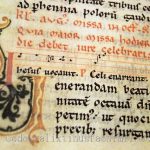

About author

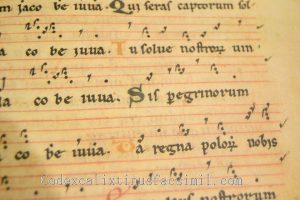
Add comment
You must be logged in to post a comment.