
Facsimile edition of the IACOBUS CODEX CALIXTINUS


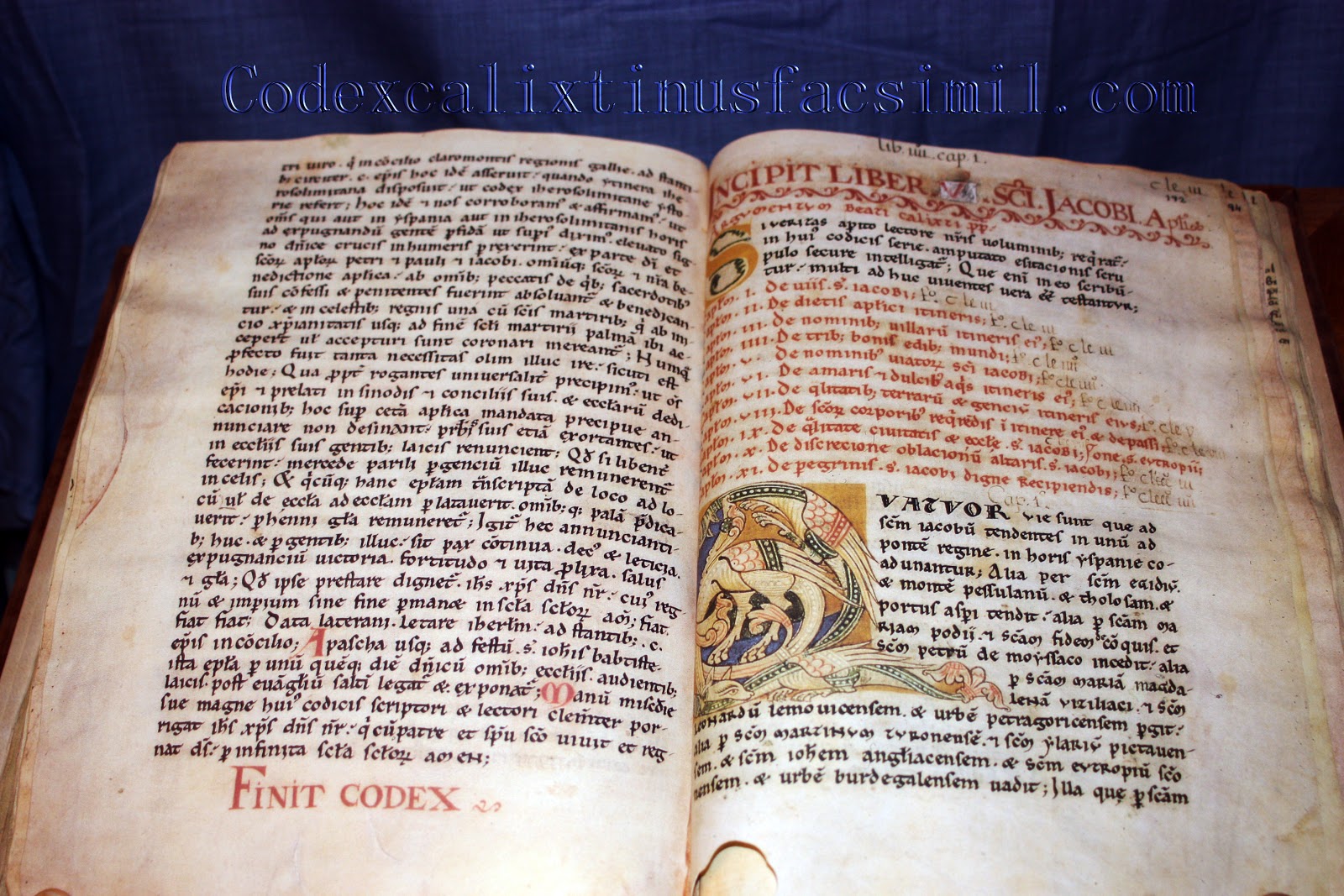
The reproduction of the original Compostela Codex has been crafted with the utmost fidelity. The artisanal work constitutes the most important part of the Codex's reproduction process: from the manufacture of special parchment paper for its 450 pages, to a die-cut format of 28.8 x 15 cm, to the reproduction of folds and creases in the folios, including their trimming, everything has a predominantly manual component.
Central pages of the magnificent copy
The primary concern in the creation of this edition was to address the scientific and philosophical aspects of the initiative. This task was undertaken by the Most Excellent Metropolitan Council, which selected the highest authorities both for transcribing the text and for writing various studies on the Codex.
The handwritten book is called a "codex." The scroll or volume, which was the earliest form of book in the ancient civilizations of the Western world and the East, competed with the codex at the beginning of the Christian era and was later replaced by it; that is, a collection of quires formed by folding one or more sheets of paper and sewing them together. The etymology of the word is *caudex*, meaning tree trunk or bark. The codex's fate was more glorious than that of the scroll. Numerous questions remain regarding the techniques medieval artisans used to create the handwritten book in codex form on parchment.
The facsimile was presented at an international congress convened for this event in Santiago de Compostela.
The print run was only 995 copies: 150 destined for the Most Excellent Chapter of the Holy Cathedral of Santiago de Compostela and 75 more are non-commercial in Roman numerals.
All copies are numbered and come with the corresponding notarized legalization.
The price per copy is €1,900 as a special online offer, with additional discounts available for professionals, publishers, or based on the number of copies purchased. The regular price per copy is €2,400.
Are you interested in the Codex Calixtinus? See the facsimile edition of the Iacobus Codex Calixtinus and the Spanish translation of Book V in the Club store.

About author

Add comment
You must be logged in to post a comment.